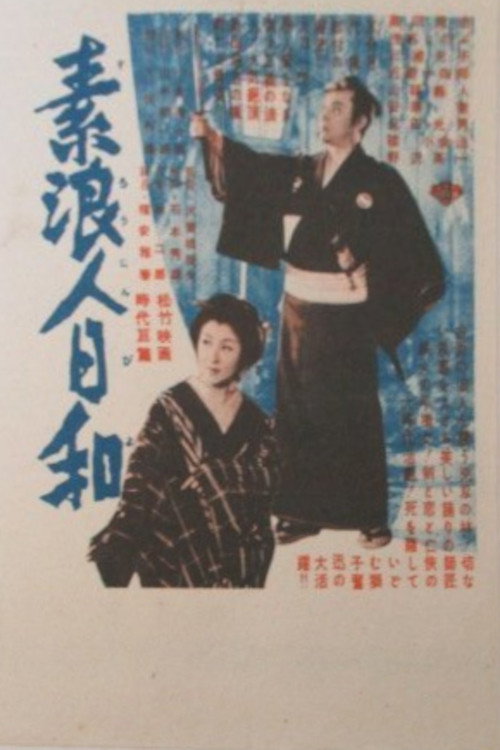
素浪人日和 1954
Directed by Tatsuo Ōsone, *素浪人日和 (1954)* unfolds at the historic Fugenji temple in Koishikawa, Edo, where a solemn 49th-day memorial service honors Kyogoku Takanori, the deceased lord of the Tanba-Miyazu domain.
Director: Tatsuo Ōsone
Cast




Frequently Asked Questions
What is 素浪人日和 (1954) about?
*素浪人日和 (1954)* follows three half-brothers, separated by circumstance and upbringing, who reunite at their father's memorial service in Edo. The film explores their contrasting lives, the unspoken tensions between them, and the weight of their shared—but divided—heritage.
Who directed 素浪人日和?
Tatsuo Ōsone directed *素浪人日和 (1954)*. Known for his evocative storytelling, Ōsone crafts a quiet yet powerful meditation on family and legacy.
Who stars in 素浪人日和?
The film features Shinobu Asaji, Mitsuko Miura, Mitsuo Nagata, Reiko Kitami, and Jūshirō Konoe among its principal cast.
Is 素浪人日和 (1954) worth watching?
While *素浪人日和* lacks an IMDb rating, its historical depth, emotional resonance, and exploration of family dynamics make it a compelling watch for fans of period dramas and character-driven narratives. The film's understated elegance and themes of reconciliation offer a quiet but lasting impact.
How long is 素浪人日和?
The runtime of *素浪人日和 (1954)* is 139 minutes.
About 素浪人日和 (1954) — A poignant Edo-era tale of family, duty, and memory
Directed by Tatsuo Ōsone, *素浪人日和 (1954)* unfolds at the historic Fugenji temple in Koishikawa, Edo, where a solemn 49th-day memorial service honors Kyogoku Takanori, the deceased lord of the Tanba-Miyazu domain.
The film delicately weaves the reunion of three half-brothers, each raised apart due to different mothers, as they converge under one roof for the first time. Their paths—shaped by rival upbringings and unspoken tensions—clash amid the weight of tradition and the echoes of a shared, yet fractured, legacy. Set against the golden hues of Edo-period Japan, the narrative delves into themes of duty, family bonds, and the quiet battles of identity, all wrapped in the serene yet haunting atmosphere of a changing era.