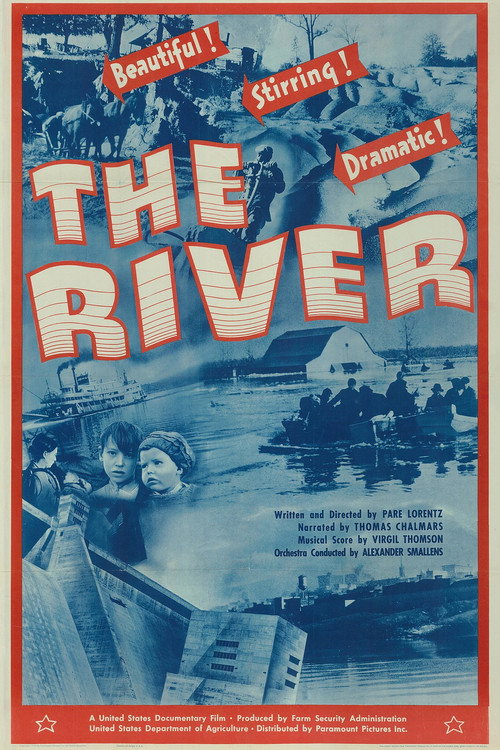
The River 1938
The River (1938) stands as a powerful Depression-era documentary that explores the vital relationship between the Mississippi River and American life.
Director: Pare Lorentz
Cast
Frequently Asked Questions
What is The River (1938) about?
This documentary examines the Mississippi River's significance to American culture while highlighting the environmental damage caused by industrial farming and logging practices during the 1930s, showing how these changes affected impoverished farming communities.
Who directed The River?
The film was directed by Pare Lorentz, a noted documentary filmmaker who specialized in socially conscious works during the 1930s.
Who stars in The River?
Thomas Chalmers provides the narration for this documentary film.
Is The River (1938) worth watching?
As an unrated documentary, The River offers historical value and environmental insight. Its concise 31-minute runtime makes it accessible for viewers interested in Depression-era America or early environmental filmmaking.
How long is The River?
The film runs for 31 minutes.
About The River (1938) — Depression-Era Environmental Documentary
The River (1938) stands as a powerful Depression-era documentary that explores the vital relationship between the Mississippi River and American life. Directed by Pare Lorentz, this 31-minute film combines striking visuals with poignant narration to examine how industrial progress has altered the landscape. Through the lens of environmental degradation, the documentary reveals the devastating impact of unsustainable farming and timber practices on both nature and struggling rural communities.
Narrated by Thomas Chalmers, the film creates an atmospheric portrait of a nation grappling with economic hardship and ecological change. Lorentz crafts a compelling argument about the consequences of human intervention in natural systems, making this short documentary surprisingly relevant today. The River (1938) serves as both historical document and environmental statement, offering viewers a contemplative experience that bridges past and present concerns about conservation and sustainability.