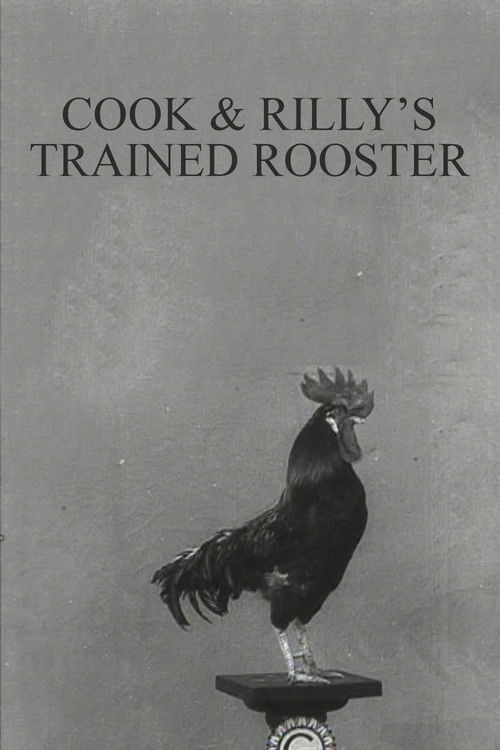
Cook & Rilly's Trained Rooster 1905
Step into the dawn of cinema with *Cook & Rilly's Trained Rooster (1905)*, a pioneering sound-synchronized short from Alice Guy-Blaché, one of the first female directors in film history.
Director: Alice Guy-Blaché
Frequently Asked Questions
What is Cook & Rilly's Trained Rooster (1905) about?
This short film showcases a trained rooster's crow, synchronized to early sound technology. It's a snapshot of cinematic innovation at the turn of the 20th century, blending simplicity with technological curiosity.
Who directed Cook & Rilly's Trained Rooster?
The film was directed by Alice Guy-Blaché, a pioneering figure in early cinema and one of the first women to direct films.
Who stars in Cook & Rilly's Trained Rooster?
Cast details for the film are not listed, leaving the spotlight solely on its unexpected star—the rooster.
Is Cook & Rilly's Trained Rooster (1905) worth watching?
While short and unrated, its historical importance as a sound-synchronized film makes it a must-see for film buffs. Its novelty outweighs its brevity, offering a unique window into cinema's past.
How long is Cook & Rilly's Trained Rooster?
The film runs for 2 minutes, a typical length for early short films.
About Cook & Rilly's Trained Rooster (1905) — The Dawn of Sound in Early Cinema
Step into the dawn of cinema with *Cook & Rilly's Trained Rooster (1905)*, a pioneering sound-synchronized short from Alice Guy-Blaché, one of the first female directors in film history. This two-minute documentary captures the simple yet striking moment of a rooster's crow, framed with the early 20th-century fascination for synchronized sound and motion.
The film's charm lies in its historical significance, offering a glimpse into the technical experiments of the era. Though modest in length, its whimsical subject and Guy-Blaché's innovative techniques make it a fascinating artifact for film enthusiasts and historians alike. The documentary genre, stripped to its essence, delivers an unexpected dose of nostalgia and wonder.