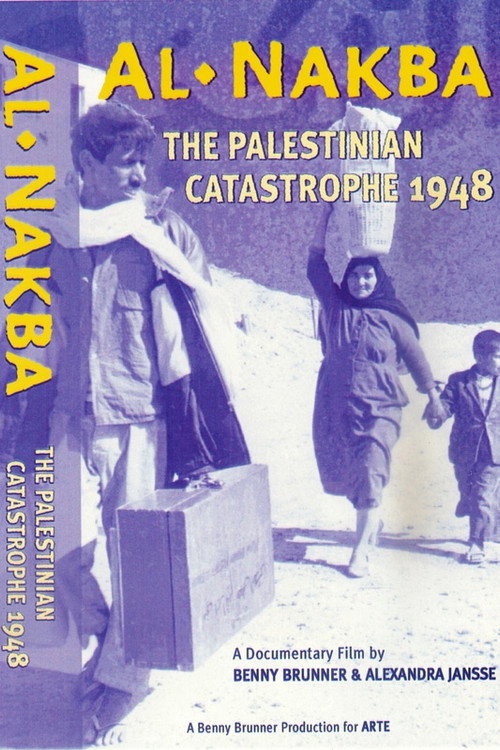
Al Nakba: The Palestinian Catastrophe 1948 1997
Al Nakba: The Palestinian Catastrophe 1948 (1997) unpacks one of the most contentious chapters in modern Middle Eastern history through a meticulously researched lens.
Director: Benny Brunner
Frequently Asked Questions
What is Al Nakba: The Palestinian Catastrophe 1948 (1997) about?
This documentary examines the 1948 Arab-Israeli War and its devastating consequences for Palestinians, including the mass displacement of over 700,000 people and the destruction of hundreds of villages. It combines historical research with personal stories to reveal the human impact of political decisions.
Who directed Al Nakba: The Palestinian Catastrophe 1948?
The film was directed by Benny Brunner, a filmmaker known for his work on politically and historically charged documentaries.
Who stars in Al Nakba: The Palestinian Catastrophe 1948?
The documentary prominently features historian Benny Morris, whose research forms the backbone of the film's narrative.
Is Al Nakba: The Palestinian Catastrophe 1948 (1997) worth watching?
For viewers interested in Middle Eastern history or the human stories behind geopolitical conflicts, this documentary is a compelling and educational watch. Its concise 58-minute runtime and reliance on credible sources make it accessible without sacrificing depth.
How long is Al Nakba: The Palestinian Catastrophe 1948?
The documentary runs for 58 minutes.
About Al Nakba: The Palestinian Catastrophe 1948 (1997) — A documentary on 1948's forgotten villages and displaced lives
Al Nakba: The Palestinian Catastrophe 1948 (1997) unpacks one of the most contentious chapters in modern Middle Eastern history through a meticulously researched lens. Benny Brunner's powerful documentary revisits the 1948 Arab-Israeli War and its aftermath, when over 700,000 Palestinians were displaced and nearly 400 villages were erased—events that reverberate to this day. Blending archival footage with scholarly insights from historian Benny Morris, the film navigates the complexities of displacement, loss, and collective memory, all while preserving the raw emotional weight of those who lived through it. With its bilingual Hebrew-Arabic dialogue and English narration, the documentary offers an unflinching look at how political decisions shaped lives and landscapes.
The atmosphere is haunting yet deeply human, balancing historical analysis with personal testimonies that underscore the human cost of war. Brunner crafts a narrative that's as much about justice as it is about understanding, making it essential viewing for anyone seeking context beyond headlines. The film doesn't just recount history—it invites reflection on how narratives are shaped and whose stories get told.