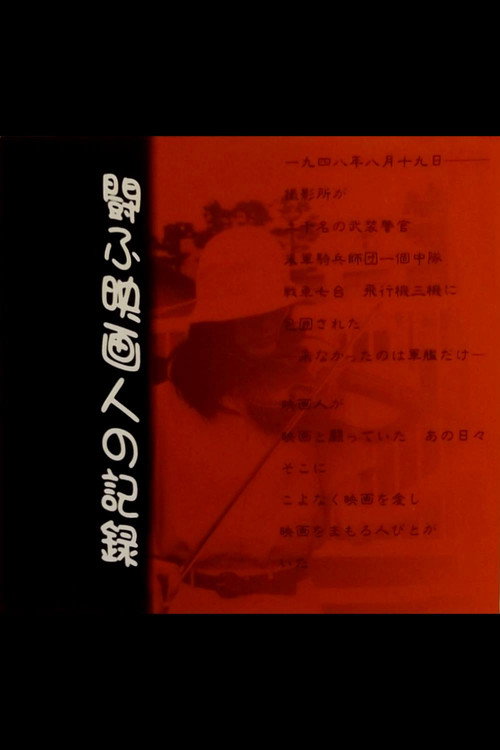
Tataka-fu eiga-jin no kiroku 1998
Dive into the turbulent labor unrest of Japan's post-war film industry with *Tataka-fu eiga-jin no kiroku* (1998), Toshinori Kiyoshima's gripping documentary that chronicles the landmark Toho strike of 1948.
Director: Toshinori Kiyoshima
Frequently Asked Questions
What is *Tataka-fu eiga-jin no kiroku* (1998) about?
This documentary examines the 1948 Toho strike, a pivotal labor dispute that pitted film industry workers against management during Japan's post-war era. It captures the struggles of artists and technicians fighting for fair wages, creative control, and union recognition, set against the backdrop of a transforming society.
Who directed *Tataka-fu eiga-jin no kiroku*?
The film was directed by Toshinori Kiyoshima, a filmmaker known for blending historical rigor with compelling storytelling.
Who stars in *Tataka-fu eiga-jin no kiroku*?
Cast details are not listed, as the documentary focuses on real-life figures and events rather than fictional characters.
Is *Tataka-fu eiga-jin no kiroku* (1998) worth watching?
As a documentary, this film serves as an essential resource for cinema historians and labor rights enthusiasts alike. While it may lack mainstream appeal, its historical depth and dramatic weight make it a valuable watch for those interested in the foundations of Japan's film industry.
How long is *Tataka-fu eiga-jin no kiroku*?
The runtime is 96 minutes.
About Tataka-fu eiga-jin no kiroku (1998) — A Deep Dive into the Toho Strike Drama
Dive into the turbulent labor unrest of Japan's post-war film industry with *Tataka-fu eiga-jin no kiroku* (1998), Toshinori Kiyoshima's gripping documentary that chronicles the landmark Toho strike of 1948. This 96-minute exploration blends historical insight with raw cinematic drama, unearthing the social and political tensions that threatened to reshape one of Japan's most iconic studios. Through archival footage and firsthand accounts, the film vividly recreates the atmosphere of solidarity and strife among filmmakers and workers, offering a compelling look at a defining moment in cinema history.
Kiyoshima's documentary shines a light on the human stories behind the headlines, revealing how ordinary artists became embroiled in a struggle for creative freedom and labor rights. With its focus on the intersection of history, art, and activism, *Tataka-fu eiga-jin no kiroku* transcends typical film retrospectives, serving as both a tribute to resilience and a cautionary tale about the cost of progress.