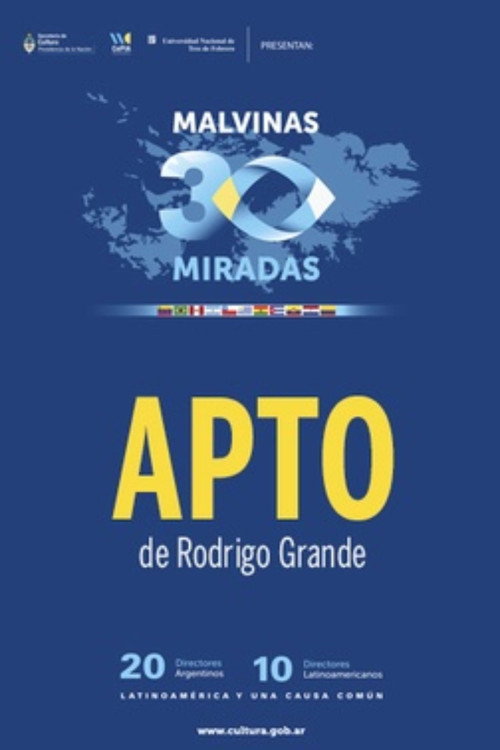
Apto 2014
Set against the tense backdrop of April 1982, *Apto (2014)* follows a young man's desperate struggle to evade an army medical checkup that could send him to the frontlines of the Falkland Islands conflict.
Director: Rodrigo Grande
Cast


Frequently Asked Questions
What is Apto (2014) about?
In April 1982, a young man faces an impossible dilemma: evade a mandatory military checkup to avoid being sent to the Falkland Islands war or face the consequences of defiance. The film captures his tense, high-stakes struggle in a gripping, short-form drama.
Who directed Apto?
Rodrigo Grande directed *Apto (2014)*, bringing a sharp eye for tension and emotional depth to this wartime drama.
Who stars in Apto?
The film features Ariel Nuñez Di Croce and Ramiro Vayo in central roles, delivering performances that drive the story's emotional core.
Is Apto (2014) worth watching?
While short in runtime, *Apto (2014)* packs a punch with its intense drama and historical backdrop. It may not be for everyone, but fans of thought-provoking war films or Rodrigo Grande's work will find it compelling.
How long is Apto?
The film runs for 10 minutes, offering a tight, immersive experience.
About Apto (2014) — How one man's choice in 1982 changed everything
Set against the tense backdrop of April 1982, *Apto (2014)* follows a young man's desperate struggle to evade an army medical checkup that could send him to the frontlines of the Falkland Islands conflict. Directed by Rodrigo Grande, this gripping 10-minute drama dives into themes of fear, duty, and the human cost of war, all wrapped in a claustrophobic, high-stakes atmosphere. With its raw intensity and tight focus, the film explores what it means to confront uncertainty when the line between safety and sacrifice blurs.
Through the lens of a single, gripping scenario, *Apto (2014)* captures the emotional weight of a generation caught between loyalty and survival. Grande's direction, paired with standout performances from Ariel Nuñez Di Croce and Ramiro Vayo, turns a short film into a poignant reflection on the personal toll of political conflict. The result is a quietly powerful piece that lingers long after the credits roll.