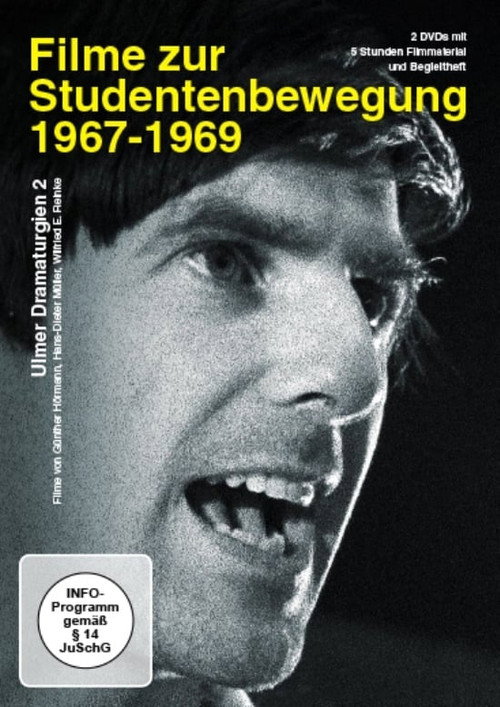
Django und die Tradition - Politisches Protokoll der DK 1968
Captured in *Django und die Tradition – Politisches Protokoll der DK (1968)*, director Günther Hörmann documents a pivotal moment in West German student politics.
Director: Günther Hörmann
Cast
Frequently Asked Questions
What is Django und die Tradition - Politisches Protokoll der DK (1968) about?
This 24-minute documentary chronicles the final SDS delegates' conference held in Hanover in late 1968. It captures the fractured movement's desperate search for renewed direction after protests and internal strife upended its structures.
Who directed Django und die Tradition - Politisches Protokoll der DK?
The film was directed by Günther Hörmann, who frames the political turmoil with documentary precision.
Who stars in Django und die Tradition - Politisches Protokoll der DK?
The documentary centers on Joscha Schmierer and the SDS delegates, whose debates and decisions shaped the film's dramatic core.
Is Django und die Tradition - Politisches Protokoll der DK (1968) worth watching?
As a concise, politically charged snapshot of 1960s radicalism, it offers valuable historical insight—especially for fans of documentary drama. Its brevity and intensity make it a compelling watch, though its niche focus may limit broad appeal.
How long is Django und die Tradition - Politisches Protokoll der DK?
The runtime is approximately 24 minutes.
About Django und die Tradition – Politisches Protokoll der DK (1968): The SDS Conference That Redefined '68
Captured in *Django und die Tradition – Politisches Protokoll der DK (1968)*, director Günther Hörmann documents a pivotal moment in West German student politics. The film zeroes in on the December 1968 SDS delegates' conference in Hanover, a gathering meant to rebuild the organization after internal upheaval. Amid heated debates, shifting alliances, and the reverberations of earlier protests—including the infamous tomato-throwing incident—factions clamored for fresh ideological clarity. Dörfliche tones clash with revolutionary rhetoric as the delegates grapple with power, gender, and the future of socialism, making it a raw snapshot of '68 in motion.
Hörmann's crisp 24-minute documentary blends drama and political urgency, weaving archival immediacy with the charged atmosphere of a movement in flux. It's a microcosm of an era when ideals clashed with institutional reality, and every word carried the weight of impending change. For students of political cinema and 20th-century protest, it's essential viewing.