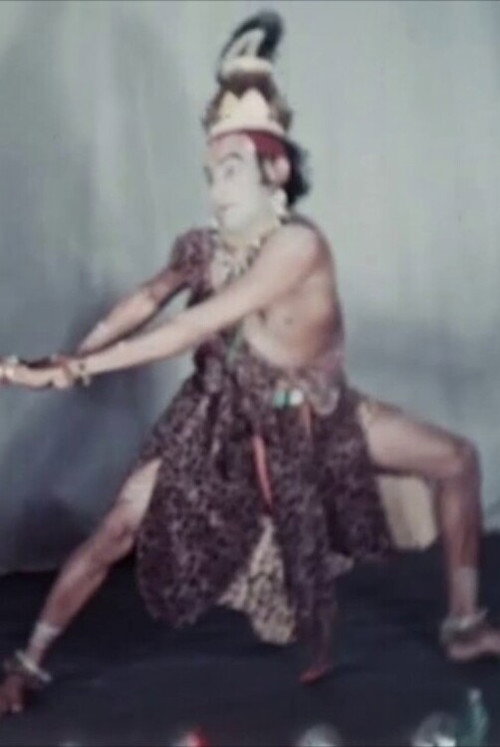
Dancers at Trivandrum Gopinath 1946
Step back to 1946 and witness a rare cinematic capture of India's classical dance heritage in *Dancers at Trivandrum Gopinath*.
Director: Sir Clarmont Skrine
Cast
Frequently Asked Questions
What is Dancers at Trivandrum Gopinath (1946) about?
*Dancers at Trivandrum Gopinath* (1946) is a short documentary that captures a live Kathakali performance by the legendary Guru Gopinath. The film showcases the intricate costumes, expressive mudras, and dramatic storytelling that define this classical dance-drama from Kerala.
Who directed Dancers at Trivandrum Gopinath?
The film was directed by Sir Clarmont Skrine, a British administrator and writer known for his contributions to Indian cultural documentation during the colonial era.
Who stars in Dancers at Trivandrum Gopinath?
The central figure in *Dancers at Trivandrum Gopinath* is Guru Gopinath, one of India's most celebrated Kathakali dancers and choreographers.
Is Dancers at Trivandrum Gopinath (1946) worth watching?
Though unrated and brief, *Dancers at Trivandrum Gopinath* offers a rare historical glimpse into Kathakali's golden age. Its cultural significance and the presence of Guru Gopinath make it a compelling watch for fans of classical arts and film history.
How long is Dancers at Trivandrum Gopinath?
The runtime of *Dancers at Trivandrum Gopinath* is 7 minutes.
About Dancers at Trivandrum Gopinath (1946) — A 7-Minute Kathakali Masterpiece by Guru Gopinath
Step back to 1946 and witness a rare cinematic capture of India's classical dance heritage in *Dancers at Trivandrum Gopinath*. This short documentary transports viewers to the sacred rhythms and vibrant storytelling of Kathakali, an ancient art form where every gesture and expression weaves a spell of devotion and drama. Directed by Sir Clarmont Skrine, the film spotlights Guru Gopinath, a legendary figure whose mastery of movement and myth-making breathed new life into Kerala's traditional dance theater. Shot in black-and-white, the seven-minute reel glows with an almost hypnotic energy, immersing audiences in the intricate footwork, elaborate costumes, and emotive facial expressions that define Kathakali's unmistakable flair. It's more than a performance—it's a cultural time capsule, preserving the grace and grandeur of a dance that has captivated audiences for centuries.
Delving into the heart of Trivandrum's cultural scene, *Dancers at Trivandrum Gopinath* (1946) offers a glimpse into the golden age of Indian classical arts when films and stage began to intersect. The film's concise runtime belies its rich visual and emotional tapestry, transporting modern viewers to a world where dance is both worship and theater. Whether you're a connoisseur of classical forms or a curious newcomer, this short documentary delivers a mesmerizing introduction to Kathakali's enduring legacy.