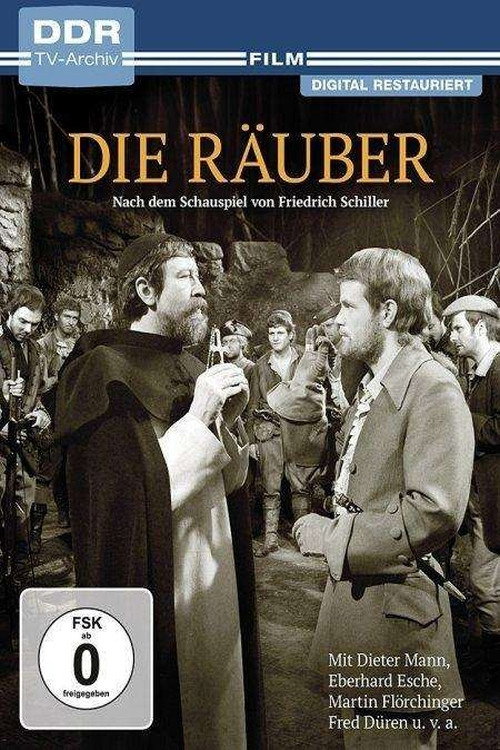
Die Räuber 1967
Set in turbulent 18th-century Germany, Gerd Keil's *Die Räuber (1967)* plunges viewers into a gripping drama of rebellion against feudal oppression and the stark contrast between two brothers.
Director: Gerd Keil
Cast





Frequently Asked Questions
What is Die Räuber (1967) about?
The film follows two brothers in 18th-century Germany rebelling against feudal tyranny. Franz embraces greed and manipulation, while Karl seeks to rally the oppressed against injustice—only to face the chaos of anarchy when his plans go awry.
Who directed Die Räuber?
The film was directed by Gerd Keil, a filmmaker known for his work in East German cinema during the 1960s.
Who stars in Die Räuber?
Kurt Steingraf, Dieter Mann, Eberhard Esche, Katja Paryla, and Jürgen Hentsch deliver standout performances in key roles.
Is Die Räuber (1967) worth watching?
As a period drama exploring power and rebellion, *Die Räuber* offers rich themes and strong performances, though its pacing may feel deliberate by modern standards. Fans of historical dramas or classic German cinema will likely appreciate its depth.
How long is Die Räuber?
Runtime details are not listed.
About Die Räuber (1967) — Two Brothers, One Revolution, and the Cost of Power
Set in turbulent 18th-century Germany, Gerd Keil's *Die Räuber (1967)* plunges viewers into a gripping drama of rebellion against feudal oppression and the stark contrast between two brothers. Franz Moor, driven by ambition and greed, embraces corruption to seize power, while his idealistic sibling Karl seeks to forge a new society through unity and defiance. Their clash of values unfolds against a backdrop of lawlessness, where Karl's noble vision of social justice collides with the harsh reality of anarchy. The film captures the tension between personal desire and collective change, blending historical depth with raw emotional intensity.
With a stellar cast led by Kurt Steingraf as Franz and Dieter Mann as Karl, *Die Räuber* delivers sharp performances that highlight Gerd Keil's directorial vision. The drama explores themes of power, morality, and the price of revolution, all wrapped in the gritty atmosphere of feudal Germany. Whether you're drawn to its historical context or its timeless questions about society, this 1967 classic remains a compelling watch for fans of thought-provoking cinema.