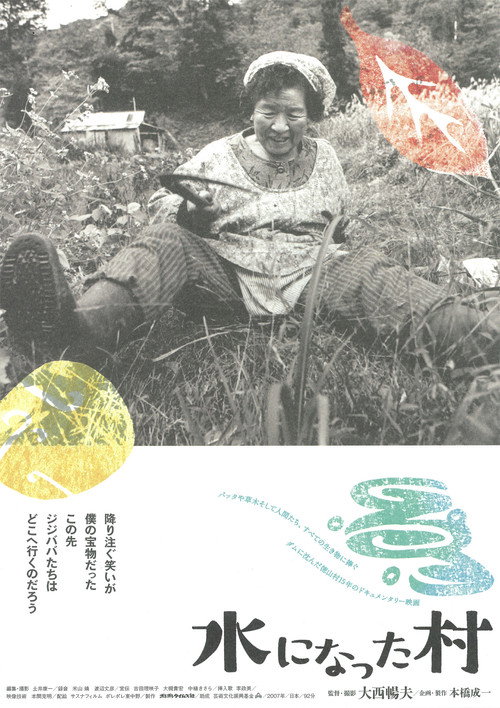
The Village Submerged 2007
Nobuo Ōnishi's *The Village Submerged (2007)* is a poignant documentary that captures the quiet resilience of Japan's elderly residents as they cling to their vanishing way of life.
Director: Nobuo Onishi
Frequently Asked Questions
What is The Village Submerged (2007) about?
This documentary by Nobuo Ōnishi explores the lives of elderly residents in Tokuyama Village, Gifu Prefecture, who refused to relocate despite plans to build Japan's largest dam in 1957. Filmed over 15 years, it captures their daily routines and enduring connection to the land as progress encroaches all around them.
Who directed The Village Submerged?
The Village Submerged was directed by Nobuo Ōnishi, a filmmaker who grew up in the Ibi District and developed a deep fascination with the villagers' stories through years of photography.
Who stars in The Village Submerged?
The documentary centers on the elderly residents of Tokuyama Village, whose identities are not listed in the official cast. It's a deeply personal project that highlights real-life experiences over traditional stardom.
Is The Village Submerged (2007) worth watching?
While unrated on IMDb, *The Village Submerged* offers a rare and moving perspective on themes of displacement, tradition, and resilience. Its intimate, observational approach makes it a compelling watch for fans of slow-burn documentaries that prioritize authenticity over spectacle.
How long is The Village Submerged?
The Village Submerged runs for 92 minutes.
The Village Submerged (2007): A Poignant Portrait of Japan's Vanishing Villages — Full Info
Nobuo Ōnishi's *The Village Submerged (2007)* is a poignant documentary that captures the quiet resilience of Japan's elderly residents as they cling to their vanishing way of life. Set against the backdrop of Tokuyama Village in Gifu Prefecture, where the construction of Japan's largest dam loomed in 1957, the film follows families who chose to stay long after relocation became the norm. Ōnishi, himself raised in the nearby Ibi District, spent 15 years documenting their daily struggles and small joys, painting a moving portrait of attachment to homeland and the bittersweet passage of time.
The documentary thrives on its meditative atmosphere, contrasting the stillness of the aging villagers with the unstoppable force of progress. Through Ōnishi's lens, the village becomes a symbol of fading traditions, where each frame feels like a farewell. It's a deeply personal work that lingers in the mind, offering a rare glimpse into lives shaped by geography, memory, and the relentless march of modernity.