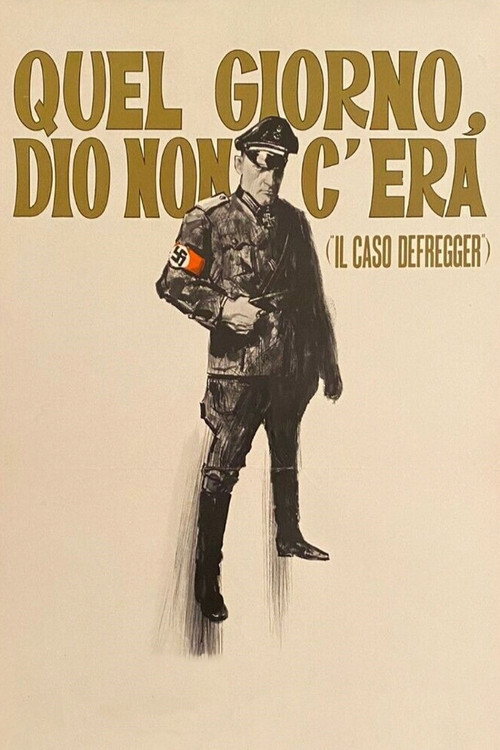
Quel giorno Dio non c'era (Il caso Defregger) 1969
Quel giorno Dio non c'era (Il caso Defregger) (1969) is a sobering Italian war drama directed by Osvaldo Civirani that delves into one of the darkest chapters of WWII.
Director: Osvaldo Civirani
Cast



Frequently Asked Questions
What is Quel giorno Dio non c'era (Il caso Defregger) (1969) about?
This Italian war drama revisits a harrowing 1944 incident where German troops executed villagers in retaliation for a partisan attack. Years later, the officer responsible faces trial as a bishop, forcing him to confront his wartime actions.
Who directed Quel giorno Dio non c'era (Il caso Defregger)?
Osvaldo Civirani directed this gripping historical drama, known for his ability to blend intense drama with historical themes.
Who stars in Quel giorno Dio non c'era (Il caso Defregger)?
The film features Carlo Bosco, Marcello Di Paolo, Giulio Dini, Helmut Gaier, and Adriana Giuffrè in leading roles.
Is Quel giorno Dio non c'era (Il caso Defregger) (1969) worth watching?
While not widely celebrated today, the film offers a compelling exploration of moral reckoning and wartime trauma. Its historical weight and dramatic tension make it a niche but thought-provoking choice for war film enthusiasts.
How long is Quel giorno Dio non c'era (Il caso Defregger)?
Runtime details are not listed.
About Quel giorno Dio non c'era (Il caso Defregger) (1969) — A WWII drama of guilt, redemption, and the shadows of history
Quel giorno Dio non c'era (Il caso Defregger) (1969) is a sobering Italian war drama directed by Osvaldo Civirani that delves into one of the darkest chapters of WWII. Set in 1944, the film unfolds in a remote Italian village nestled in the Apennine Mountains, where a small community faces unimaginable horror after a partisan attack on German occupying forces. In retaliation, a German lieutenant orders the execution of several villagers, a decision that haunts him long after the war ends. Years later, as the lieutenant—now a bishop—stands trial for these wartime atrocities, the film explores the weight of guilt, the complexity of redemption, and the haunting shadows of history that refuse to fade.
With a tone steeped in moral gravity and historical weight, Civirani crafts a narrative that blends raw realism with deep psychological insight. The story isn't just about war; it's about the choices individuals make under pressure and the inescapable consequences of their actions. The film's atmosphere is one of quiet dread and reflection, where every scene feels like a step toward an inevitable reckoning.