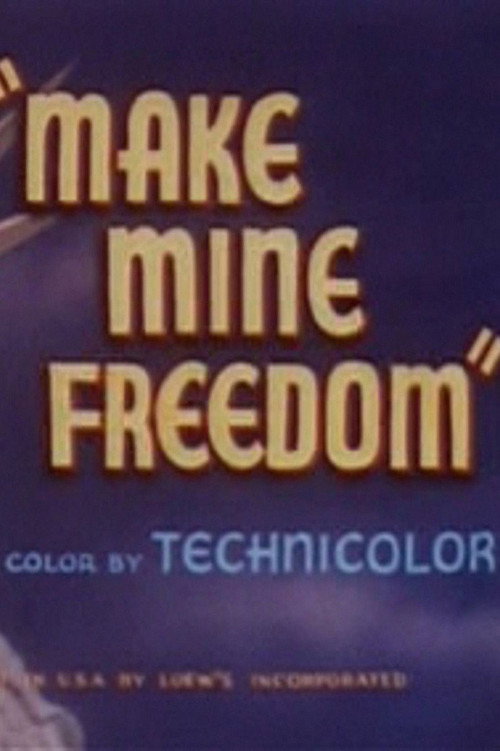
Make Mine Freedom 1948
Set against the tense backdrop of the Cold War in 1948, *Make Mine Freedom* delivers a spirited animated satire that lampoons Communism while championing the virtues of American capitalism.
Director: Joseph Barbera
Cast
Frequently Asked Questions
What is *Make Mine Freedom* (1948) about?
This animated short follows John Q. Public, a simple man enticed by the false promises of Communism. Through colorful characters and sharp humor, the film contrasts the pitfalls of collectivism with the rewards of American free-market capitalism, all while celebrating individual liberty.
Who directed *Make Mine Freedom*?
The film was directed by animation legend Joseph Barbera, best known for co-founding Hanna-Barbera Studios and creating iconic animated series like *The Flintstones* and *Scooby-Doo*.
Who stars in *Make Mine Freedom*?
The film features voice performances by Billy Bletcher and Daws Butler, bringing energy and personality to its cast of characters.
Is *Make Mine Freedom* (1948) worth watching?
While its political stance may not resonate with everyone today, the short's historical significance and Barbera's animation prowess make it a compelling watch for fans of Cold War-era films. On IMDb, it remains a cult favorite among animation enthusiasts, offering a unique snapshot of mid-century American values.
How long is *Make Mine Freedom*?
The film runs for approximately 9 minutes.
About Make Mine Freedom (1948) — The Cold War Cartoon That Celebrated Capitalism
Set against the tense backdrop of the Cold War in 1948, *Make Mine Freedom* delivers a spirited animated satire that lampoons Communism while championing the virtues of American capitalism. Directed by animation pioneer Joseph Barbera and voiced by the talented Billy Bletcher and Daws Butler, this nine-minute short film blends sharp political commentary with infectious humor, wrapping its serious themes in the playful guise of classic cartoon antics. The story follows hapless Everyman John Q. Public as he's lured by the siren song of collectivism, only to discover that true freedom—and the prosperity it brings—lies in the values of individualism and free enterprise.
This Cold War-era gem stands out for its bold, unapologetic stance on ideology, wrapped in the accessible language of animation. Barbera's direction ensures the message lands with both wit and warmth, while the snappy vocal performances by Bletcher and Butler add layers of charm and comedic timing. Though brief, *Make Mine Freedom* remains a fascinating time capsule of mid-century American political thought, offering a glimpse into how animation was wielded as a tool for cultural persuasion during a pivotal era in history.