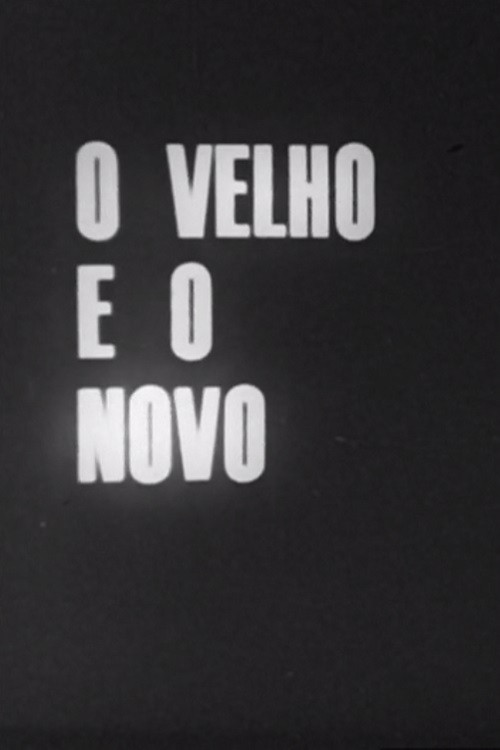
O Velho e o Novo 1976
Ricardo Costa's *O Velho e o Novo (1976)* captures a poignant moment in Portuguese history through the lens of raw documentary realism.
Director: Ricardo Costa
Cast
Frequently Asked Questions
What is O Velho e o Novo (1976) about?
Ricardo Costa's documentary explores the tensions between tradition and modernization in rural Portugal during the mid-1970s. Through the lives of local figures like Tio Caniço, the film delves into the personal and cultural upheavals facing communities navigating post-revolutionary shifts.
Who directed O Velho e o Novo?
Ricardo Costa is the director of *O Velho e o Novo*, known for his documentary-style approach that prioritizes authentic storytelling and social observation.
Who stars in O Velho e o Novo?
The documentary features Tio Caniço, Luis Caniço, Júlio Sabino, and Eládio Clímaco as its central figures, whose personal stories anchor the film's narrative.
Is O Velho e o Novo (1976) worth watching?
As a documentary rooted in historical and cultural significance, *O Velho e o Novo* offers a compelling perspective for fans of social realism. Its unflinching portrayal of change and tradition makes it a rewarding watch for those interested in Portuguese history and documentary filmmaking.
How long is O Velho e o Novo?
Runtime details for *O Velho e o Novo* are not listed.
About O Velho e o Novo (1976) — A Raw Portrait of Tradition and Change
Ricardo Costa's *O Velho e o Novo (1976)* captures a poignant moment in Portuguese history through the lens of raw documentary realism. The film immerses viewers in the rural landscapes of mainland Portugal, where tradition clashes with modernization in ways that feel both timeless and urgent. Through intimate storytelling and unfiltered visuals, Costa paints a portrait of ordinary people—represented powerfully by Tio Caniço, Luis Caniço, Júlio Sabino, and Eládio Clímaco—whose lives reflect the broader societal shifts of the era. The documentary's stark atmosphere and thematic depth make it a compelling study of change, memory, and identity.
Shot in a minimalist style that prioritizes authenticity over spectacle, *O Velho e o Novo* stands as a testament to the power of non-fiction filmmaking. Its focus on generational divides and the quiet resilience of rural communities offers a window into a Portugal that is both vanished and lingering in collective memory. Whether you're drawn to its historical resonance or its cinematic honesty, the film invites reflection on how progress reshapes not just landscapes, but the people who inhabit them.