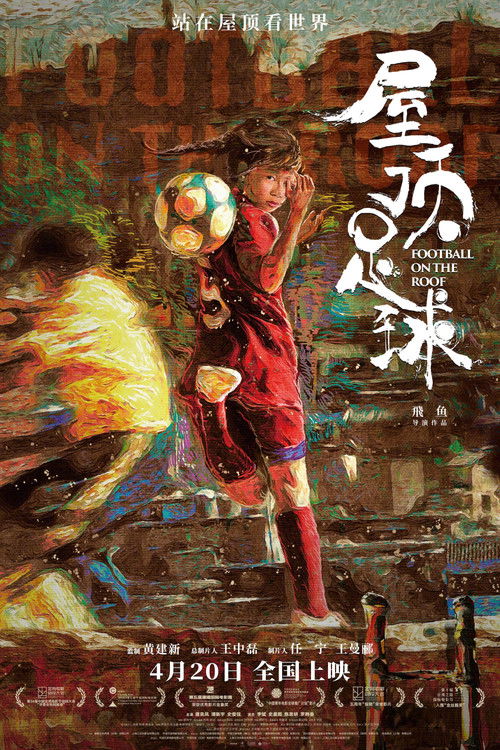
Football on the Roof 2021
Set against the backdrop of an urban rooftop, *Football on the Roof* (2021) weaves a quiet, introspective drama under the guidance of director Feiyu Liao.
Director: Feiyu Liao
Cast
Frequently Asked Questions
What is Football on the Roof (2021) about?
*Football on the Roof* follows two young men who find solace and challenge in their shared love of the game on a rooftop in the city. Their journey becomes a reflection of resilience and the bonds that form when chasing dreams against the odds.
Who directed Football on the Roof?
The film was directed by Feiyu Liao, whose subtle yet evocative style brings depth to the everyday struggles and triumphs of the characters.
Who stars in Football on the Roof?
The leads are played by Xinyu Tan and Liangfeng Tang, whose chemistry carries the emotional core of the story.
Is Football on the Roof (2021) worth watching?
Though not widely rated, *Football on the Roof* offers a refreshing take on the drama genre, blending quiet storytelling with themes of perseverance. Fans of slice-of-life narratives will find its understated charm compelling.
How long is Football on the Roof?
The film has a runtime of 98 minutes.
About Football on the Roof (2021) — A Quiet Drama of Ambition and Friendship
Set against the backdrop of an urban rooftop, *Football on the Roof* (2021) weaves a quiet, introspective drama under the guidance of director Feiyu Liao. The story unfolds through the eyes of two young men, Xinyu Tan and Liangfeng Tang, who navigate the blurred lines between childhood dreams and adult realities while chasing the simple joy of kicking a football on a makeshift rooftop pitch. The film captures a slice-of-life atmosphere where the rhythm of the game mirrors their personal struggles and fleeting moments of connection. With its restrained yet poignant storytelling, the movie explores themes of ambition, camaraderie, and the search for purpose in a fast-paced world.
At its heart, *Football on the Roof* is a character-driven tale that transcends the boundaries of conventional sports dramas. The rooftop setting becomes a symbol of both freedom and confinement, where the boundaries of their playground reflect the limits of their aspirations. Liao's direction infuses the narrative with a subtle emotional weight, making each kick of the ball feel like a metaphor for the characters' relentless pursuit of something just out of reach.