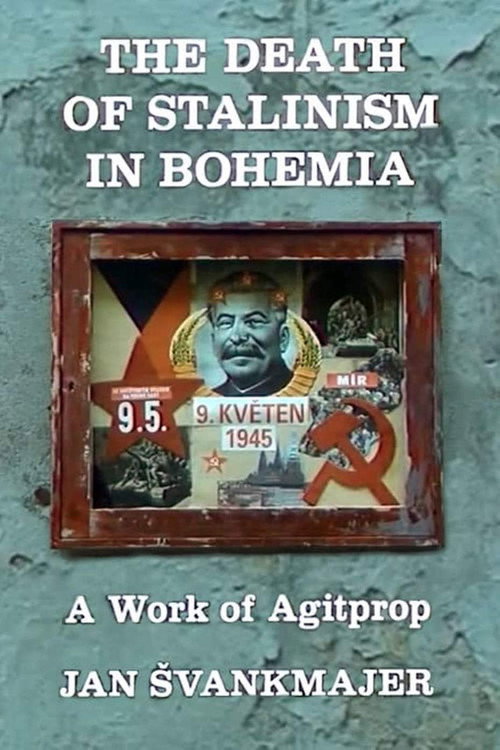
The Death of Stalinism in Bohemia 1991
"A Work of Agitprop."
Jan Švankmajer's surreal and provocative short film *The Death of Stalinism in Bohemia* (1991) slices into history with the precision of a surgeon's scalpel.
Director: Jan Švankmajer
Frequently Asked Questions
What is *The Death of Stalinism in Bohemia* (1991) about?
The film uses a surreal animated sequence to explore Czechoslovakia's political transformation from the 1948 Communist takeover to the 1989 Velvet Revolution. It strips away the Stalinist cult of personality, exposing the fragility of authoritarian rule through Jan Švankmajer's visually arresting style.
Who directed *The Death of Stalinism in Bohemia*?
Jan Švankmajer, the acclaimed Czech filmmaker known for his surrealist and stop-motion works, directed this short film.
Who stars in *The Death of Stalinism in Bohemia*?
Director information is not available.
Is *The Death of Stalinism in Bohemia* (1991) worth watching?
While it's a niche film, Švankmajer's provocative animation and political themes make it a compelling watch for fans of avant-garde cinema and history buffs. Its brevity and intensity reward those seeking something beyond conventional storytelling.
How long is *The Death of Stalinism in Bohemia*?
The film runs for 10 minutes.
About The Death of Stalinism in Bohemia (1991) — Jan Švankmajer's darkly poetic political allegory
Jan Švankmajer's surreal and provocative short film *The Death of Stalinism in Bohemia* (1991) slices into history with the precision of a surgeon's scalpel. The opening image—a dissected Stalin bust on an operating table—unfolds into a darkly poetic animated journey through Czechoslovakia's turbulent 20th century. From the iron grip of the 1948 Communist coup to the triumph of the 1989 Velvet Revolution, the film distills decades of political upheaval into a visually striking allegory. Švankmajer's signature stop-motion style blends grotesque humor with haunting symbolism, turning historical events into a nightmarish yet oddly playful meditation on power, oppression, and liberation.
A scathing piece of agitprop, the film critiques the cult of personality and the fragility of totalitarian regimes through stark, symbolic imagery. The absence of dialogue amplifies the impact, letting the animation's raw energy and Švankmajer's distinctive vision speak volumes. For fans of avant-garde cinema and political satire, this 10-minute masterpiece offers a dense, thought-provoking experience that lingers long after the credits roll.