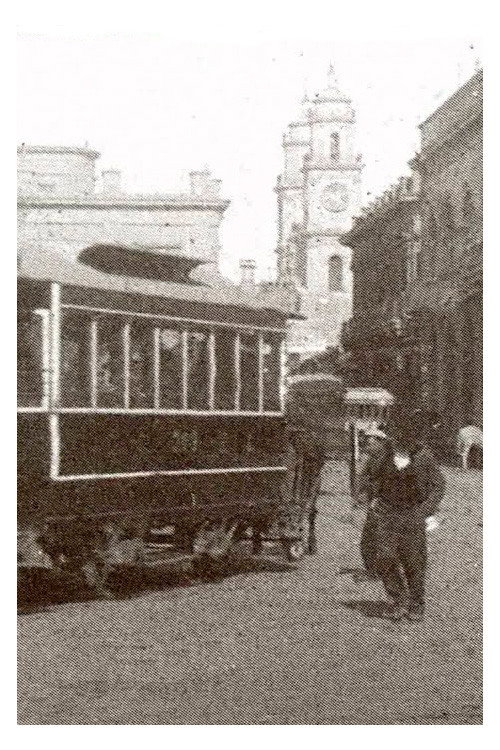
Plaza de Mayo 1902
Step into the past with *Plaza de Mayo* (1902), an early cinematic glimpse into one of Buenos Aires' most historic public squares.
Director: Eugenio Cardini
Frequently Asked Questions
What is Plaza de Mayo (1902) about?
This early documentary by Eugenio Cardini captures the lively atmosphere of Buenos Aires' Plaza de Mayo in 1902, showcasing daily life in one of the city's most significant public spaces. The film documents the square's role as a gathering place, reflecting the social and cultural pulse of Argentina at the time.
Who directed Plaza de Mayo?
Eugenio Cardini directed *Plaza de Mayo* (1902), contributing to the early days of Argentine documentary filmmaking.
Who stars in Plaza de Mayo?
Cast details for *Plaza de Mayo* (1902) are not available, but the film itself serves as a historical snapshot of the square's visitors and residents.
Is Plaza de Mayo (1902) worth watching?
*Plaza de Mayo* (1902) is a rare and fascinating piece of cinematic history for those interested in early documentaries or Argentine culture. Its historical value outweighs its brevity, making it a compelling watch for film enthusiasts and historians alike.
How long is Plaza de Mayo?
Runtime details for *Plaza de Mayo* (1902) are not listed.
About Plaza de Mayo (1902) — A Silent Snapshot of Buenos Aires' Iconic Square
Step into the past with *Plaza de Mayo* (1902), an early cinematic glimpse into one of Buenos Aires' most historic public squares. Directed by Eugenio Cardini, this short documentary transports viewers to a bygone era, capturing the everyday life and social dynamics of a pivotal urban space during the turn of the 20th century. As crowds gather and local figures move through the square, the film immerses audiences in the atmosphere of Argentina's evolving society, where tradition and modernity blur. Though silent and brief, *Plaza de Mayo* offers a fascinating window into the cultural heartbeat of its time.
This pioneering work stands as a testament to the power of early filmmaking, preserving fleeting moments in black-and-white. While details about the cast remain scarce, Cardini's direction infuses the footage with a sense of quiet observation, inviting reflection on how public spaces become living records of history. Whether you're a film historian or a curious cinephile, *Plaza de Mayo* (1902) is a must-view for understanding the roots of documentary cinema.