Hitchin. Honouring the Brave 1912
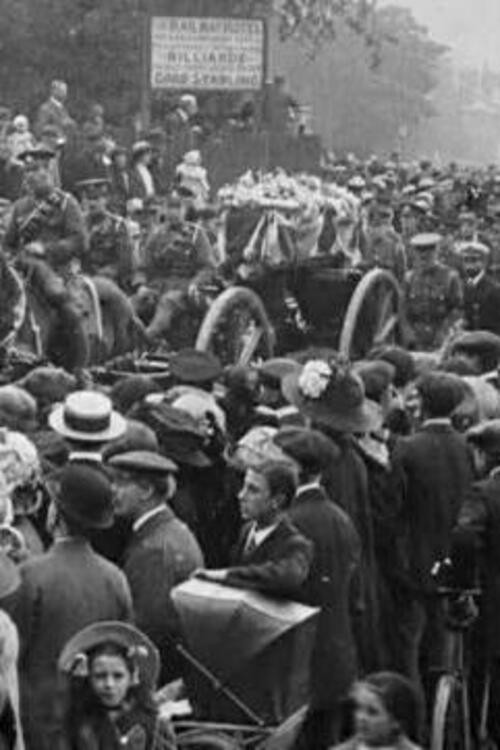
Hitchin. Honouring the Brave (1912) is a brief yet poignant early documentary capturing a solemn military tribute for victims of an air disaster in Hitchin.
Frequently Asked Questions
What is Hitchin. Honouring the Brave (1912) about?
This 1912 documentary records a military funeral procession in Hitchin, honoring victims of a tragic air crash. It captures a community's collective sorrow through a ceremonial march, offering a historical snapshot of early public mourning traditions.
Who directed Hitchin. Honouring the Brave?
Director information is not available.
Who stars in Hitchin. Honouring the Brave?
Cast details are not listed for this 1912 documentary.
Is Hitchin. Honouring the Brave (1912) worth watching?
Though unrated and brief, this early documentary provides historical value, offering a rare visual record of early 20th-century funeral customs. Its emotional resonance and scarcity make it worth viewing for enthusiasts of silent films or local history, despite its limited runtime.
How long is Hitchin. Honouring the Brave?
Hitchin. Honouring the Brave (1912) has a runtime of 2 minutes.
About Hitchin. Honouring the Brave (1912) — A Solemn 1912 Documentary of Military Mourning in Hitchin
Hitchin. Honouring the Brave (1912) is a brief yet poignant early documentary capturing a solemn military tribute for victims of an air disaster in Hitchin. This minute-long film documents the funeral procession through the town's streets, offering a window into early 20th-century public mourning customs with quiet dignity. The black-and-white footage, likely preserved from a local archive, carries a reflective atmosphere, turning a forgotten tragedy into a historical artifact. As one of the earliest genre entries, it stands as a somber reminder of sacrifice and community resilience during a time of rapid technological and social change.
Though the director and cast remain unidentified, the film's historical significance lies in its depiction of communal grief and public honor. The documentary format, sparse in 1912, provides a raw glimpse into how communities processed loss in an era before mass media. Its brevity belies its emotional weight, making it a compelling watch for historians and film enthusiasts alike seeking to understand the evolution of cinematic storytelling and memorial practices.