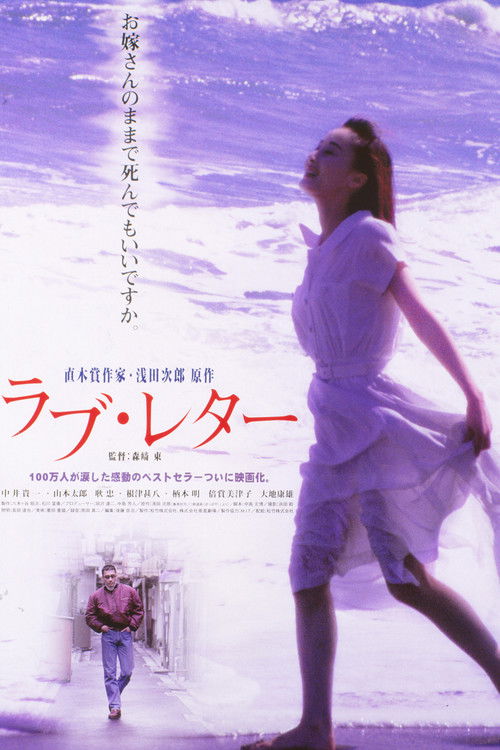
Love Letter 1998
Azuma Morisaki's 1998 romantic drama *Love Letter* unfolds a delicate, soul-stirring bond between a hardened gangster and a Chinese woman whose marriage begins under deception.
Director: Azuma Morisaki
Cast










Frequently Asked Questions
What is Love Letter (1998) about?
The film follows a gangster whose life takes an unexpected turn when he marries a Chinese woman who initially hides her true intentions. As their relationship deepens, they navigate trust, deception, and the possibility of emotional redemption through their spiritual connection.
Who directed Love Letter?
Love Letter was directed by Azuma Morisaki, who is known for crafting emotionally resonant stories with deep character studies.
Who stars in Love Letter?
The film stars Kiichi Nakai, Zhong Geng, Taro Yamamoto, Jinpachi Nezu, and Mitsuko Baisho in pivotal roles.
Is Love Letter (1998) worth watching?
If you enjoy romance films with emotional depth and understated performances, Love Letter is a compelling choice. While it doesn't rely on dramatic twists, its quiet exploration of trust and redemption makes it a thoughtful and rewarding viewing experience.
How long is Love Letter?
Love Letter has a runtime of 108 minutes.
About Love Letter (1998) — A Romance Forged in Deception and Redemption
Azuma Morisaki's 1998 romantic drama *Love Letter* unfolds a delicate, soul-stirring bond between a hardened gangster and a Chinese woman whose marriage begins under deception. Set against a backdrop of quiet streets and warm interiors, the film explores themes of redemption, trust, and the unexpected bridges between two people from vastly different worlds. Kiichi Nakai delivers a nuanced performance as the gangster, whose quiet vulnerability contrasts with his tough exterior, while Zhong Geng brings an air of mystery and subtlety to her role as the woman who enters his life under false pretenses. The story weaves together emotional depth and subtle tension, making *Love Letter (1998)* a standout in the romance genre.
With its gentle pacing and rich character development, the film lingers on moments of quiet reflection and emotional honesty. Morisaki's direction captures the intricacies of human connection, leaving viewers to ponder the power of second chances and the true meaning of love. The atmospheric tone and understated performances create an immersive experience that lingers long after the credits roll.