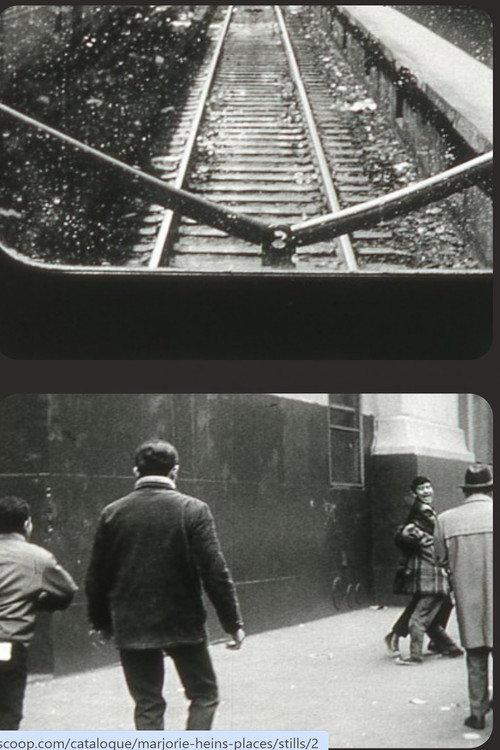
Places 1969
Marjorie Heins' 1969 short film Places (1969) turns New York City into a visual manifesto, weaving together the gritty pulse of the Lower East Side with the polished veneer of Fifth Avenue.
Director: Marjorie Heins
Frequently Asked Questions
What is Places (1969) about?
Places (1969) is a radical experimental short that contrasts the stark inequalities of urban and rural America through striking visuals and a dissonant soundscape of economic statistics. Directed by Marjorie Heins, the film layers New York City's gritty neighborhoods with polished elite spaces, creating a provocative dialogue about power and place.
Who directed Places?
Places was directed by Marjorie Heins, a filmmaker known for her politically charged and experimental approach to cinema.
Who stars in Places?
Cast details for Places (1969) are not listed, as the film focuses on visual and thematic storytelling rather than traditional performances.
Is Places (1969) worth watching?
Places (1969) is a niche experimental film best suited for viewers interested in 1960s political cinema or avant-garde visual storytelling. While it lacks a conventional rating, its provocative use of imagery and sound makes it a compelling watch for fans of radical filmmaking and social commentary.
How long is Places?
Places (1969) runs for 8 minutes.
About Places (1969) — A striking experimental short by Marjorie Heins
Marjorie Heins' 1969 short film Places (1969) turns New York City into a visual manifesto, weaving together the gritty pulse of the Lower East Side with the polished veneer of Fifth Avenue. Against a dissonant soundtrack of stark statistics—corporate profits pitted against welfare rolls and territorial conquests—the film contrasts the urban landscape's contradictions, juxtaposing subway tunnels and bridges with wistful shots of a rural farmhouse in Trumansburg. The result is a hypnotic, unsettling collage that sharpens the viewer's gaze on the inequalities embedded in both city and country life.
As a radical critique of social structures, Places eschews conventional narrative for a sensory barrage of imagery and data, where the World Almanac's cold numbers clash with the emotional texture of the footage. Heins crafts an atmosphere that is at once urgent and reflective, inviting audiences to question the systems that shape the spaces they inhabit. With its experimental approach, the film lingers as a time capsule of late-1960s dissent and a haunting meditation on power and place.