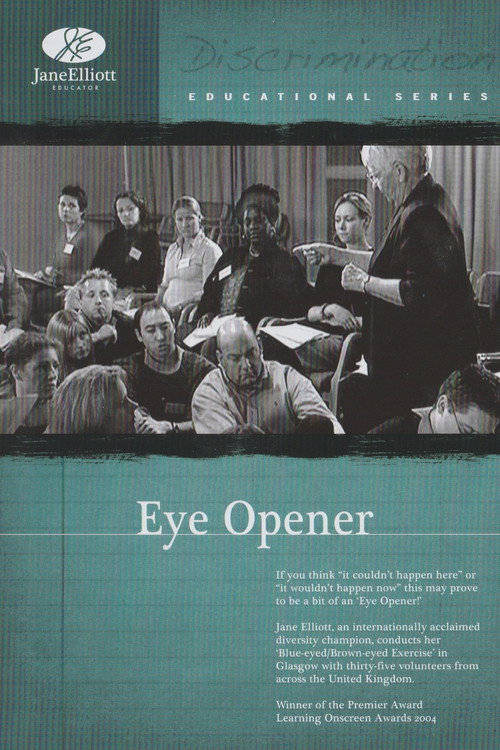
Eye Opener 2004
"If you think it couldn't happen here or it wouldn't happen now, this may prove to be a bit of an Eye Opener!"
Jane Elliott, a renowned educator and anti-discrimination activist, brings her groundbreaking Blue-eyed, Brown-eyed Exercise to Glasgow in 2004's Eye Opener (2004).
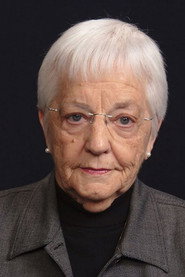
Cast
Frequently Asked Questions
What is Eye Opener (2004) about?
This documentary follows Jane Elliott's controversial Blue-eyed, Brown-eyed Exercise in Glasgow, where volunteers experience firsthand how prejudice and power imbalance shape behavior. The experiment reveals how quickly people accept unfair roles, even when they know better.
Who directed Eye Opener?
Director information is not available.
Who stars in Eye Opener?
The documentary features diversity champion Jane Elliott alongside thirty-five volunteers from the United Kingdom.
Is Eye Opener (2004) worth watching?
As a documentary, Eye Opener (2004) delivers a rare blend of educational value and emotional impact, making it a must-watch for anyone interested in social justice. Its concise 50-minute runtime keeps the experience sharp and thought-provoking, though unrated status means expectations should be tempered.
How long is Eye Opener?
Eye Opener has a runtime of 50 minutes.
About Eye Opener (2004) — Jane Elliott's shocking UK social experiment in 50 minutes
Jane Elliott, a renowned educator and anti-discrimination activist, brings her groundbreaking Blue-eyed, Brown-eyed Exercise to Glasgow in 2004's Eye Opener (2004). This powerful documentary immerses thirty-five volunteers from across the United Kingdom in an eye-opening social experiment that flips societal power dynamics on their head.
The film captures raw reactions as blue-eyed participants grapple with the sudden shock of powerlessness, while brown-eyed participants confront their own complicity in systems they know are unjust. Through Elliott's unflinching approach, the documentary doesn't just document history—it forces viewers to question their own biases and the ease with which prejudice can take root, even in progressive spaces. The resulting exploration of privilege, empathy, and systemic inequality lingers long after the final frame.