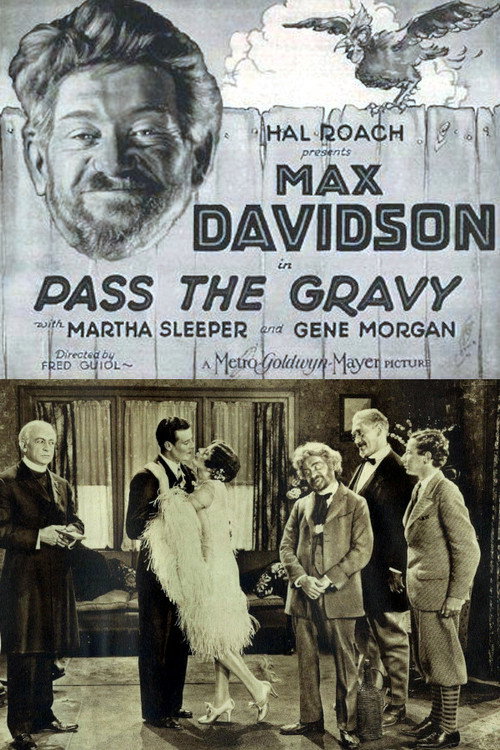
Pass the Gravy 1928
Leo McCarey's *Pass the Gravy (1928)* delivers a classic silent-era comedy packed with escalating chaos and heartfelt feuds.
Director: Leo McCarey
Cast



Frequently Asked Questions
What is Pass the Gravy (1928) about?
*Pass the Gravy* follows a decades-long rivalry between two neighbors over chickens that keep invading one another's gardens. When their children announce their engagement, the men call a truce—only for a comedic chain reaction to unfold when a misplaced dollar leads to the wrong bird on the dinner table.
Who directed Pass the Gravy?
The film was directed by Leo McCarey, the legendary filmmaker behind classics like *Duck Soup* and *My Little Chickadee*.
Who stars in Pass the Gravy?
The cast includes Max Davidson, Martha Sleeper, Spec O'Donnell, Bert Sprotte, and Gene Morgan in key roles.
Is Pass the Gravy (1928) worth watching?
At just 23 minutes, *Pass the Gravy* is a delightful slice of silent-era slapstick that punches above its weight. Perfect for fans of vintage comedy, its quick pacing and clever gags make it a charming time capsule of early filmmaking.
How long is Pass the Gravy?
The film runs for 23 minutes.
About Pass the Gravy (1928) — A classic silent comedy full of feuds, farce, and feathered frenzy
Leo McCarey's *Pass the Gravy (1928)* delivers a classic silent-era comedy packed with escalating chaos and heartfelt feuds. The story centers on Max Davidson's Schultz, a proud poultry breeder whose prize-winning roosters keep raiding neighbor Max Davidson's garden, sparking endless bickering. When their children fall in love and propose a truce dinner, Davidson invites Schultz over—only for a mischievous son to squander the chicken-buying money on the wrong bird. What unfolds is a masterclass in farce, blending physical comedy with the absurdity of generational grudges. The film's charm lies in its relatable conflicts and McCarey's knack for turning everyday squabbles into cinematic gold.
With its brisk 23-minute runtime, *Pass the Gravy* is a perfect pocket-sized escape into 1920s slapstick brilliance. Themes of family loyalty, pride, and the silly lengths people go to 'win' resonate as much today as they did a century ago. Shot through with McCarey's signature wit, the short punchily illustrates how a simple misunderstanding can spiral into a full-blown disaster—all over a single roasted bird.