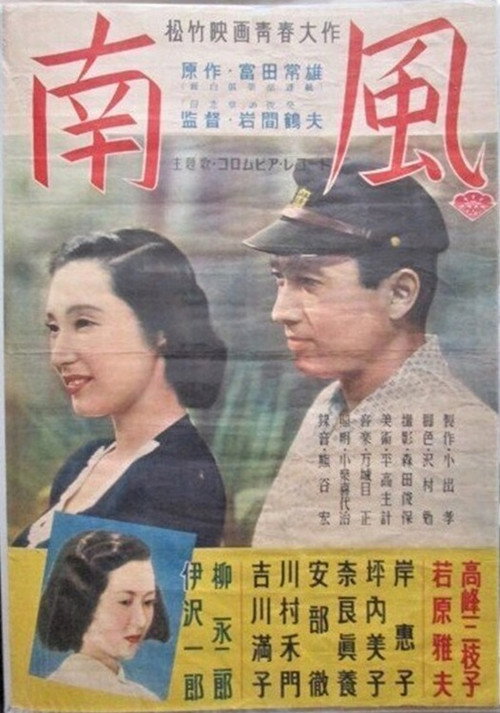
Minami kaze 1951
Directed by Tsuruo Iwama, *Minami kaze* (1951) is a poignant slice-of-life drama set in post-war Japan, where the gentle sway of the southern breeze carries both warmth and melancholy.
Director: Tsuruo Iwama
Cast




Frequently Asked Questions
What is Minami kaze (1951) about?
This 1951 Japanese drama unfolds in a tranquil coastal village where everyday lives unfold with quiet intensity. The story centers on relationships tested by change, love tested by distance, and the delicate balance between joy and sorrow in post-war Japan.
Who directed Minami kaze?
Tsuruo Iwama directed this introspective 1951 drama, bringing a sensitive touch to its portrayal of small-town life and human connections.
Who stars in Minami kaze?
The film features Masao Wakahara, Mieko Takamine, Mitsuko Yoshikawa, Eijirō Yanagi, and Keiko Kishi in leading roles.
Is Minami kaze (1951) worth watching?
Though it's not widely rated, *Minami kaze* offers a rare glimpse into 1950s Japanese life with its gentle pacing and heartfelt storytelling. It's ideal for fans of classic dramas who appreciate quiet, character-driven cinema.
How long is Minami kaze?
The film runs for 92 minutes.
About Minami kaze (1951) — Post-war Japanese Drama with Mieko Takamine
Directed by Tsuruo Iwama, *Minami kaze* (1951) is a poignant slice-of-life drama set in post-war Japan, where the gentle sway of the southern breeze carries both warmth and melancholy. The film follows a quiet coastal village as its residents navigate love, loss, and the slow rhythm of daily life, their stories woven together with quiet elegance. With a focus on human connections and the bittersweet beauty of fleeting moments, Iwama crafts a gentle yet deeply moving narrative.
Starring the luminous Mieko Takamine and Masao Wakahara, *Minami kaze* captures the essence of mid-century Japanese cinema—intimate, reflective, and rich with emotional depth. The film's atmosphere lingers like the soft wind it's named after, making it a hidden gem for fans of classic Japanese storytelling. Though its genre remains unlisted, the story's tender exploration of relationships and nostalgia evokes the spirit of contemporary dramas and romances of its era.