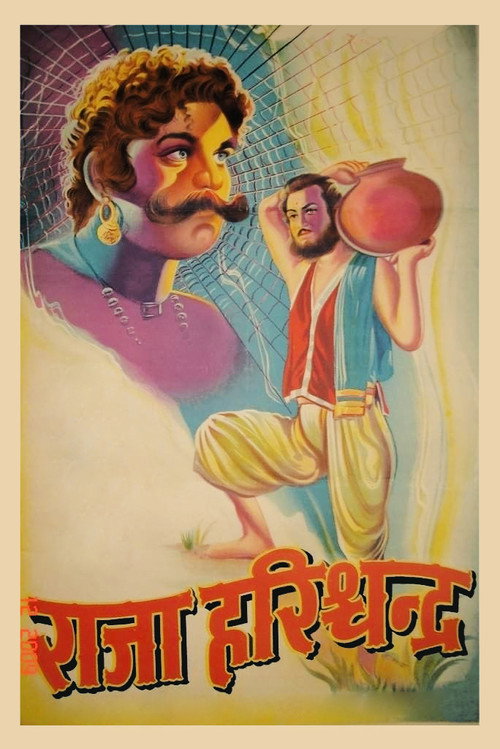
Raja Harishchandra 1913
Pioneering Indian filmmaker Dhundiraj Govind Phalke's *Raja Harishchandra (1913)* is a silent-era masterpiece that redefined cinema on the subcontinent.
Director: Dhundiraj Govind Phalke
Cast
Frequently Asked Questions
What is Raja Harishchandra (1913) about?
*Raja Harishchandra (1913)* follows the noble king Harishchandra as he faces an unrelenting trial of faith and duty. To honor his sacred promise to the sage Vishwamitra, he surrenders everything—his throne, his wife, even his children—unfolding a story of profound sacrifice and moral resolve.
Who directed Raja Harishchandra?
The film was directed by Dhundiraj Govind Phalke, a visionary often hailed as the father of Indian cinema.
Who stars in Raja Harishchandra?
The film features D.D. Dabke as the lead king, supported by P.G. Sane, Bhalachandra D. Phalke, G.V. Sane, and Dattatreya Kshirsagar.
Is Raja Harishchandra (1913) worth watching?
While extremely dated by modern standards, *Raja Harishchandra* remains essential viewing for anyone interested in the origins of Indian cinema. Its historical and cultural significance outweighs its technical limitations, offering a rare glimpse into the art form's earliest days.
How long is Raja Harishchandra?
The film runs for approximately 40 minutes, making it a concise yet impactful cinematic experience.
About Raja Harishchandra (1913) — The Silent-Era Epic That Defined Indian Cinema
Pioneering Indian filmmaker Dhundiraj Govind Phalke's *Raja Harishchandra (1913)* is a silent-era masterpiece that redefined cinema on the subcontinent. This historic drama transports viewers to ancient India, where the legendary king Harishchandra faces the ultimate test of integrity when he sacrifices his kingdom, family, and dignity to keep a sacred vow made to the sage Vishwamitra. Shot in black-and-white with minimal intertitles, the film captures a mythic atmosphere thick with moral weight and emotional intensity.
At its core, *Raja Harishchandra (1913)* explores timeless themes of honor, sacrifice, and unwavering devotion to truth—qualities that resonate as powerfully today as they did over a century ago. Though sparse in dialogue, the visual storytelling and dramatic performances by D.D. Dabke and P.G. Sane lend the narrative a quiet grandeur, establishing it not just as a milestone in Indian cinema's early years but as a cultural touchstone that still captivates scholars and cinephiles alike.