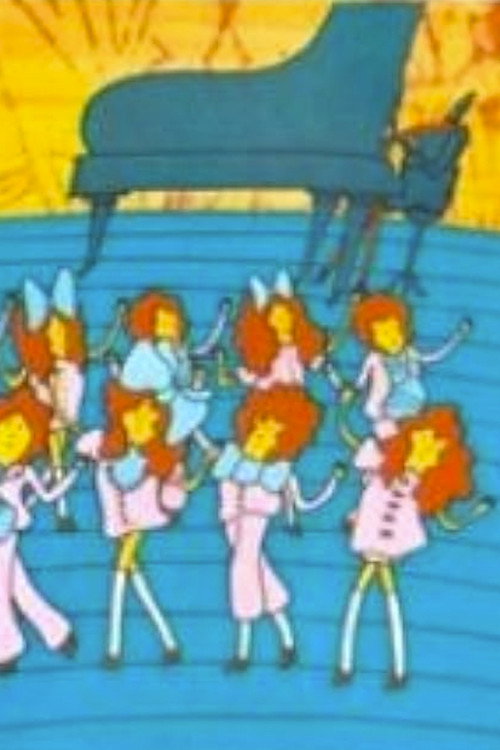
Dance School 1972
In the 1972 animated short *Dance School*, Hungarian director Péter Szoboszlay crafts a satirical fable about discipline, conformity, and the pressures of parenthood.
Director: Péter Szoboszlay
Frequently Asked Questions
What is Dance School (1972) about?
This five-minute Hungarian animation follows parents at a dance school who, desperate to minimize their children's energy, find themselves under the iron rule of a tyrannical instructor. Their once-vibrant kids are gradually stripped of personality, reshaped into stiff, uniform figures that reflect society's obsession with order and perfection.
Who directed Dance School?
Péter Szoboszlay directed *Dance School* in 1972, creating a visually striking short film that blends surrealism with sharp social commentary.
Who stars in Dance School?
Cast details for *Dance School* are not publicly listed, reflecting its status as a lesser-known animated short from 1972.
Is Dance School (1972) worth watching?
While unrated and obscure, *Dance School* offers a unique blend of surreal animation and social satire that appeals to fans of experimental short films. Its stark visuals and subversive themes make it a fascinating, if niche, watch for those interested in Eastern European animation.
How long is Dance School?
*Dance School* is a brief five-minute animated short, perfect for viewers seeking a quick but thought-provoking cinematic experience.
About Dance School (1972) — A Surreal Hungarian Animation on Conformity and Control
In the 1972 animated short *Dance School*, Hungarian director Péter Szoboszlay crafts a satirical fable about discipline, conformity, and the pressures of parenthood. Set in a rigidly structured dance hall where parents anxiously await their children's performance, the story unfolds through a surreal transformation as the strict instructor's demands reduce the boisterous kids into increasingly rigid, puppet-like forms—first garden gnomes, then mushrooms, swans, and finally motionless figures. The film's stark visuals and hypnotic piano score amplify its critique of adult expectations and societal standardization, wrapped in a dreamlike surrealism that lingers long after the five-minute runtime.
This Hungarian animation stands out as a biting commentary on the absurd lengths adults go to mold children into idealized versions of themselves, blending stark symbolism with the eerie precision of a nightmare. Szoboszlay's direction transforms a simple school celebration into a darkly comedic exploration of control, where the pursuit of perfection strips away individuality entirely.