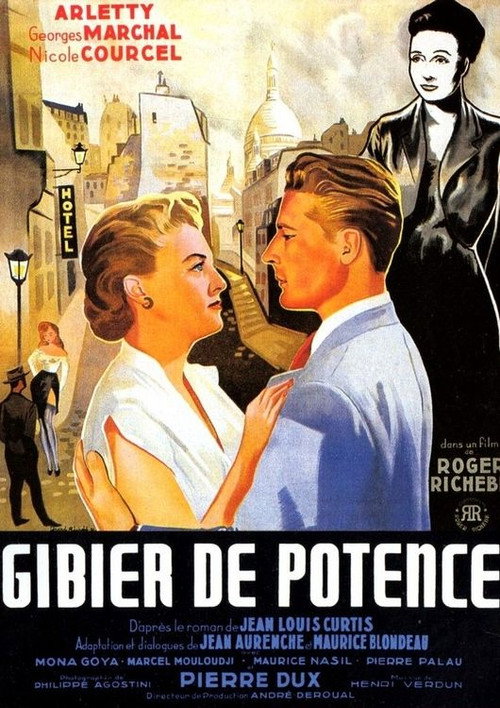
Gigolo 1951
Gigolo (1951), directed by Roger Richebé, plunges viewers into post-war France through the gripping drama of Marceau Le Guern, a man haunted by his past. Fresh from the horrors of war and captivity, Marceau—once a gigolo catering to lonely women—finds himself at a crossroads.
Director: Roger Richebé
Cast





Frequently Asked Questions
What is Gigolo (1951) about?
The film follows Marceau Le Guern, a war veteran who once worked as a gigolo, trading his good looks for fleeting luxury. After years of captivity, he returns to a world that has moved on, desperate to leave his past behind and forge a new life with the woman he loves.
Who directed Gigolo?
Gigolo was directed by Roger Richebé, a French filmmaker known for his work in drama and post-war cinema.
Who stars in Gigolo?
The film features Arletty, Nicole Courcel, Pierre Dux, Mona Goya, and Marcel Mouloudji in pivotal roles.
Is Gigolo (1951) worth watching?
While Gigolo (1951) is a lesser-known French drama, its themes of survival, moral ambiguity, and post-war despair make it a compelling watch for fans of historical drama and character-driven storytelling. Its runtime of 106 minutes keeps the narrative tight and engaging.
How long is Gigolo?
Gigolo (1951) has a runtime of 106 minutes.
About Gigolo (1951) — A Post-War Drama of Redemption and Survival
Gigolo (1951), directed by Roger Richebé, plunges viewers into post-war France through the gripping drama of Marceau Le Guern, a man haunted by his past. Fresh from the horrors of war and captivity, Marceau—once a gigolo catering to lonely women—finds himself at a crossroads. After being abandoned in an orphanage by society, he embraced a life of fleeting luxury, only to see it crumble. Now, as he seeks redemption and a chance at love with a younger woman, he must confront the shadows of his past, where survival and human connection blur into a moral labyrinth.
Roger Richebé crafts a bleak yet compassionate portrait of survival and moral redemption, weaving themes of exploitation, resilience, and the human cost of war. The film's moody atmosphere, steeped in post-war desolation, mirrors Marceau's internal struggle, making Gigolo (1951) a poignant exploration of identity and second chances.