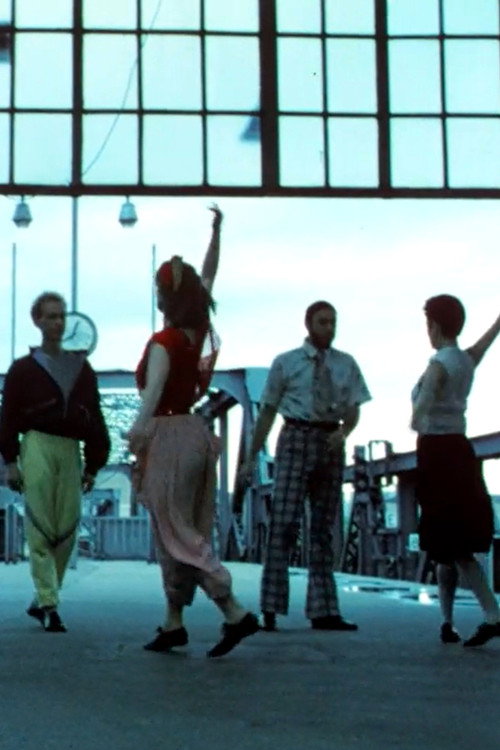
Gleissprung 1984
Dive into the rhythmic pulse of 1980s Berlin with *Gleissprung* (1984), a captivating short film that transforms an ordinary train station into a canvas for spontaneous dance.
Director: Alf Böhmert
Frequently Asked Questions
What is Gleissprung (1984) about?
This short film follows the spontaneous formation of a dance group at Berlin's Gleisdreieck station, where strangers unite through music and movement. As the rhythm takes over, the group grows until the next train arrives, signaling the end of their impromptu performance.
Who directed Gleissprung?
Alf Böhmert directed *Gleissprung*, crafting a visually dynamic snapshot of 1980s Berlin through music and dance.
Who stars in Gleissprung?
Cast details for *Gleissprung* (1984) are currently unavailable.
Is Gleissprung (1984) worth watching?
While short in length, *Gleissprung* (1984) offers a unique, energetic glimpse into the fusion of music and urban life. Its 14-minute runtime makes it a quick but memorable watch, ideal for fans of experimental dance films or Berlin's cultural history.
How long is Gleissprung?
*Gleissprung* (1984) has a runtime of 14 minutes.
About Gleissprung (1984) — A 14-Minute Dance Explosion at Berlin's Gleisdreieck Station
Dive into the rhythmic pulse of 1980s Berlin with *Gleissprung* (1984), a captivating short film that transforms an ordinary train station into a canvas for spontaneous dance. Directed by Alf Böhmert, this 14-minute gem weaves music and movement through the urban landscape of Gleisdreieck station, where a modest dance group grows organically, drawing in passersby until the next train departs. The film pulses with energy, blending the gritty charm of 1980s Berlin with the raw, unfiltered joy of collective expression. With its focus on music and community, *Gleissprung* captures a fleeting moment of cultural unity, where strangers become dancers and the station becomes a stage.
Set against the backdrop of a bustling Berlin transit hub, *Gleissprung* (1984) explores themes of spontaneity, connection, and the power of shared rhythm. The film's atmosphere is electric, blending the hum of trains with the beat of footsteps, creating a sensory experience that lingers long after the credits roll. Though brief, its impact is undeniable—a testament to how music can turn everyday spaces into places of wonder.