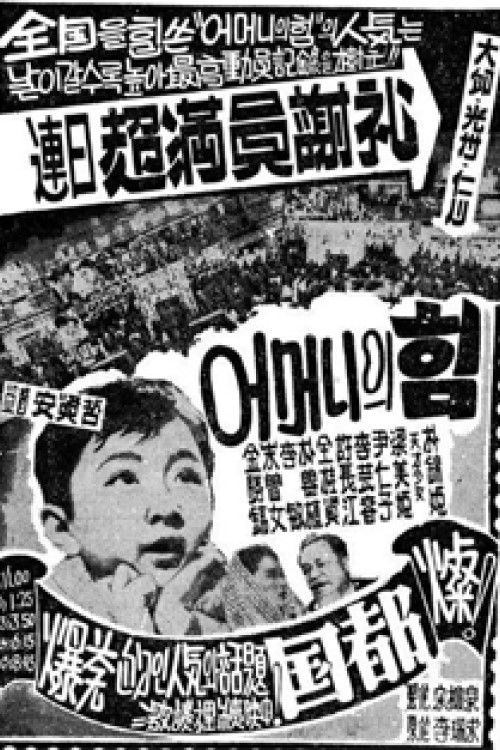
Mother's Power 1960
In the heart of Seoul, bathed in the melancholic drizzle of a spring rain, a poignant love story unfolds against the backdrop of Japan's colonial rule.
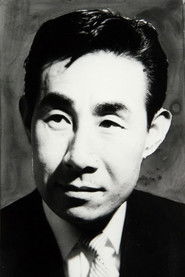
Director: Ahn Hyun chul
Cast
Frequently Asked Questions
What is *Mother's Power* (1960) about?
Set in 1930s Seoul under Japanese occupation, the film follows Jeong-ok, a gisaeng who falls for Myeong-gyu, the son of a bank president. After their forbidden love leads to tragedy, Jeong-ok must raise their child alone, facing societal judgment with quiet determination.
Who directed *Mother's Power*?
The film was directed by Ahn Hyun-chul, a filmmaker known for his emotionally charged dramas set in Korea's colonial era.
Who stars in *Mother's Power*?
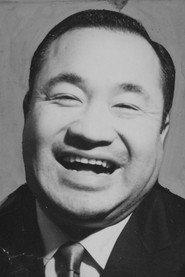
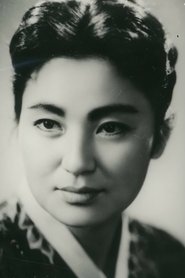
The cast includes Kim Seung-ho, Ju Jeung-nyeo, Park Geum-hui, and Heo Chang-kang, with Lee Min in a key supporting role.
Is *Mother's Power* (1960) worth watching?
As a classic Korean drama, *Mother's Power* offers a poignant exploration of love and sacrifice, though it may resonate more with fans of historical or emotional storytelling. Its themes and black-and-white cinematography make it a compelling watch for cinephiles.
How long is *Mother's Power*?
The film has a runtime of 123 minutes, making it a concise yet immersive experience.
About Mother's Power (1960) — A Korean classic of love, sacrifice, and maternal strength
In the heart of Seoul, bathed in the melancholic drizzle of a spring rain, a poignant love story unfolds against the backdrop of Japan's colonial rule. *Mother's Power* (1960), directed by Ahn Hyun-chul, explores the enduring bond between a gisaeng named Jeong-ok and Myeong-gyu, the son of a wealthy bank president. Their romance defies societal expectations, but tragedy strikes when Myeong-gyu dies, leaving Jeong-ok to raise their child alone. The film paints a vivid portrait of resilience, sacrifice, and the quiet strength of a mother's love.
At its core, *Mother's Power* is a timeless drama that delves into themes of class disparity, familial duty, and the unyielding power of maternal devotion. The black-and-white cinematography amplifies the emotional weight, immersing viewers in a bygone era where tradition clashes with personal longing. With a runtime of 123 minutes, this Korean classic offers a moving tribute to the unspoken sacrifices of motherhood.