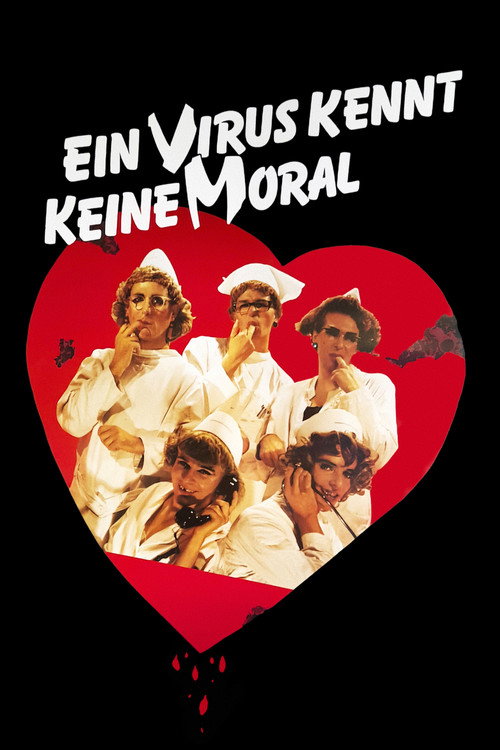
A Virus Knows No Morals 1986
German provocateur Rosa von Praunheim's biting 1986 satire *A Virus Knows No Morals* dives into the early-AIDS era with unflinching black comedy and dystopian flair.
Director: Rosa von Praunheim
Cast




Frequently Asked Questions
What is A Virus Knows No Morals (1986) about?
Rosa von Praunheim's 1986 film is a scathing satire set during the AIDS epidemic, following ordinary lives upended by stigma and bureaucracy. Nurses, a bathhouse owner, and a dying man all navigate a society that weaponizes fear against the queer community.
Who directed A Virus Knows No Morals?
The film was directed by Rosa von Praunheim, a pioneering German filmmaker known for radical queer cinema and provocative social commentary.
Who stars in A Virus Knows No Morals?
The ensemble cast includes Dieter Dicken, Maria Hasenäcker, Rosa von Praunheim himself, Eva-Maria Kurz, and Ina Blum.
Is A Virus Knows No Morals (1986) worth watching?
*A Virus Knows No Morals* isn't for the faint-hearted—it's a raw, uncompromising satire that challenges viewers with its dark humor and grim themes. While it lacks a rating, its cult status and importance as a historical artifact make it compelling for fans of provocative cinema.
How long is A Virus Knows No Morals?
The runtime is 82 minutes.
About A Virus Knows No Morals (1986) — Rosa von Praunheim's Controversial AIDS-Era Satire
German provocateur Rosa von Praunheim's biting 1986 satire *A Virus Knows No Morals* dives into the early-AIDS era with unflinching black comedy and dystopian flair.
Through six vignettes, the film exposes society's callousness during crisis: exhausted nurses gamble over which patient will perish next, a bathhouse owner fights Kaposi's sarcoma while chasing profits, and desperate gay terrorists strike back at a complacent government. Toni (Dieter Dicken) turns the tables on a sensationalist reporter by brandishing a contaminated syringe, while authorities quarantine victims in the euphemistically named "Hell Gay Land." Blending sci-fi surrealism with raw drama, von Praunheim crafts a feverish critique of institutional neglect, fear-mongering, and queer resilience.
This cult classic remains a defiant artifact of its time, channelling outrage into absurdist storytelling that's as unsettling as it is darkly humorous.