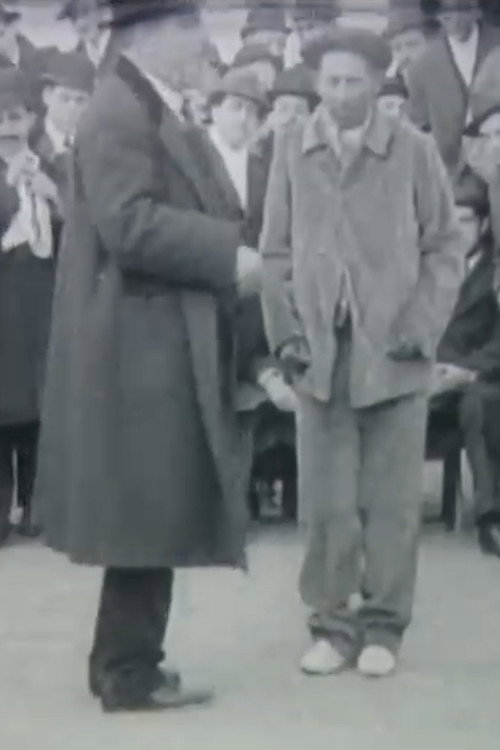
School outing with Dr Maestre to the Ciempozuelos mental asylum (Madrid) in 1915 1915
Step back to 1915 with this fascinating Spanish short documentary, School outing with Dr Maestre to the Ciempozuelos mental asylum (Madrid) in 1915.
Frequently Asked Questions
What is School outing with Dr Maestre to the Ciempozuelos mental asylum (Madrid) in 1915 (1915) about?
This silent-era short documentary captures a 1915 field trip led by Dr. Maestre to Madrid's Ciempozuelos asylum, offering a rare visual record of early psychiatric care. The eight-minute film documents institutional life, patient interactions, and societal views on mental health from the time.
Who directed School outing with Dr Maestre to the Ciempozuelos mental asylum (Madrid) in 1915?
Director information is not available.
Who stars in School outing with Dr Maestre to the Ciempozuelos mental asylum (Madrid) in 1915?
The film features Dr. Maestre leading the excursion, along with asylum staff and patients present during the visit.
Is School outing with Dr Maestre to the Ciempozuelos mental asylum (Madrid) in 1915 (1915) worth watching?
Though unrated and brief, this documentary holds immense historical value for those interested in early psychiatry or Spanish cinema. Its short runtime and silent-era style make it accessible, while its cultural and medical significance provides a unique lens into early 20th-century Spain. Film enthusiasts and historians will likely find it intriguing.
How long is School outing with Dr Maestre to the Ciempozuelos mental asylum (Madrid) in 1915?
The film runs for 8 minutes.
School outing with Dr Maestre to the Ciempozuelos mental asylum (Madrid) in 1915: A Glimpse into Early 20th-Century Psychiatry — Full Info
Step back to 1915 with this fascinating Spanish short documentary, School outing with Dr Maestre to the Ciempozuelos mental asylum (Madrid) in 1915. Captured in just eight minutes of silent film, this rare glimpse behind the institutional walls of early 20th-century psychiatry offers a compelling look at mental health treatment in Madrid during that era. The grainy footage transports viewers to a time when understanding of mental illness was still evolving, and institutions like Ciempozuelos were both places of care and curiosity for the public. The atmosphere is one of clinical observation, with the film serving as both educational tool and historical artifact, revealing societal attitudes toward mental health care in pre-war Spain.
Though details about the director remain unknown, the film's historical significance lies in its role as an early documentary artifact, blending anthropological interest with medical documentation. As a silent-era film, it relies on visual storytelling to convey its themes—curiosity, compassion, and the limits of early psychiatric knowledge. For historians, film buffs, and anyone intrigued by Spain's cinematic heritage, this short documentary remains a poignant piece of early non-fiction cinema that invites reflection on how far mental health care has come.