Litraso 2024
Litraso (2024), helmed by visionary director Clarisse Tagayun, unfolds as a visually poetic meditation on the rhythm of creation and the unpredictable journey of life.
Director: Clarisse Tagayun
Cast

Frequently Asked Questions
What is Litraso (2024) about?
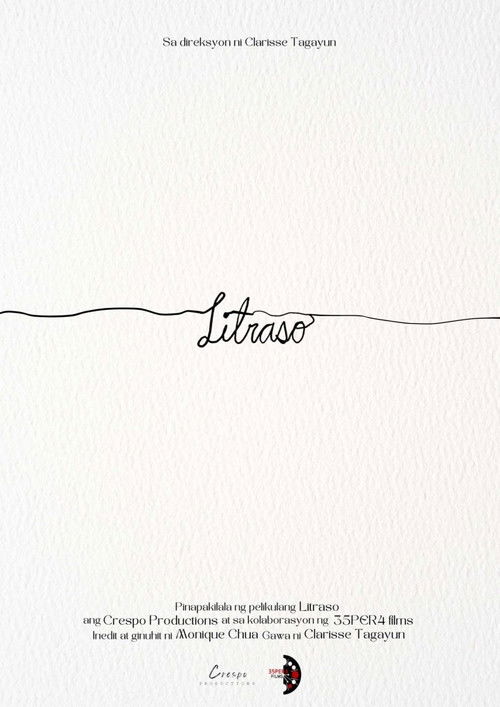
Litraso (2024) follows an artist whose simple act of drawing a line spirals into an intricate exploration of life's curves and reversals. The film traces the delicate balance between precision and spontaneity, capturing how small gestures can shape larger narratives. It's a reflection on creation, adaptation, and the beauty found in life's inconsistencies.
Who directed Litraso?
Litraso was directed by Clarisse Tagayun, a filmmaker known for her visually evocative and thematically rich storytelling.
Who stars in Litraso?
The film stars Monique Chua in the central role of the artist.
Is Litraso (2024) worth watching?
While Litraso (2024) hasn't been rated on IMDb, its meditative drama and unique visual storytelling make it a compelling watch for fans of artistic films. The exploration of creativity and life's unpredictability offers a fresh perspective, though viewers should be prepared for a slow, contemplative pace.
How long is Litraso?
Runtime details for Litraso are not listed.
About Litraso (2024) — A Visual Poem of Art, Life, and Unexpected Turns
Litraso (2024), helmed by visionary director Clarisse Tagayun, unfolds as a visually poetic meditation on the rhythm of creation and the unpredictable journey of life. The film begins with a solitary artist poised with pen in hand, tracing a single line that spirals into a dynamic dance of curves and reversals. As the drawing evolves, so too does the narrative, mirroring the ebb and flow of human experience—moments of precision giving way to sudden detours, each stroke a chapter in an unfolding story. The atmosphere is contemplative yet charged with quiet intensity, inviting viewers to reflect on how small, deliberate actions can shape larger, unexpected paths.
Tagayun's delicate approach transforms the canvas into a metaphor for resilience and adaptability, where imperfection becomes part of the beauty. With the genre grounded in drama, Litraso (2024) lingers in the space between control and spontaneity, asking: What do we reveal when we step back to admire our work—and how do we begin again?