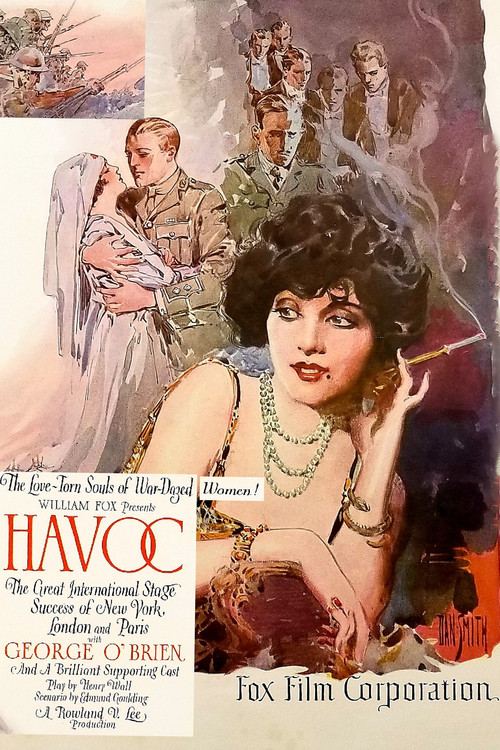
Havoc 1925
"The Love-Torn Souls of War-Dazed Women!"
Havoc (1925) plunges audiences into the emotional whirlwind of post-World War I England, where love and duty collide in the shadow of global conflict. Directed by Rowland V.
Director: Rowland V. Lee
Cast




Frequently Asked Questions
What is Havoc (1925) about?
Havoc (1925) follows two English officers, Dick Chappell and Roddy Dunton, who both love the same woman, Violet Deering. When Chappell enlists in World War I to prove his worth, his actions set off a chain of events that tests the boundaries of love, duty, and personal sacrifice.
Who directed Havoc?
Havoc was directed by Rowland V. Lee, a filmmaker known for his work in silent and early sound cinema who brought a distinctive emotional depth to his projects.
Who stars in Havoc?
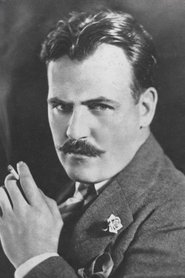
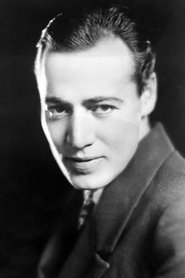
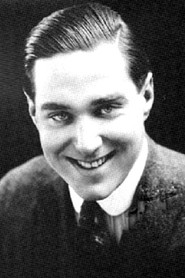
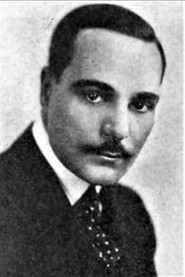
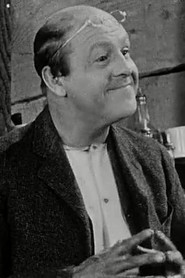
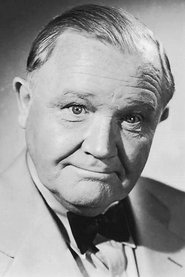
The film stars George O'Brien as Dick Chappell, Madge Bellamy as the romantic lead, Walter McGrail as Roddy Dunton, and Margaret Livingston as Violet Deering, with supporting roles by Eulalie Jensen and Leslie Fenton.
Is Havoc (1925) worth watching?
While Havoc (1925) may not boast a widely recognized legacy, it offers a compelling snapshot of post-World War I drama with strong performances and thematic weight. For fans of silent-era films or historical romances, it provides a thought-provoking glimpse into the era's emotional and social landscapes.
How long is Havoc?
Havoc (1925) runs for approximately 90 minutes.
About Havoc (1925) — A Silent-Era Drama of Love and War's Lasting Scars
Havoc (1925) plunges audiences into the emotional whirlwind of post-World War I England, where love and duty collide in the shadow of global conflict. Directed by Rowland V. Lee, this silent-era drama weaves a poignant tale of rivalry and sacrifice as two English officers, Dick Chappell and Roddy Dunton, find themselves vying for the affection of Violet Deering. Chappell, driven by ambition and a desire to prove himself, enlists in the war, believing his heroism will earn Violet's admiration. The film captures the raw intensity of emotions—longing, regret, and the haunting weight of wartime choices—set against a backdrop of societal upheaval. With its stark black-and-white visuals and powerful performances from George O'Brien and Madge Bellamy, Havoc (1925) explores the human cost of war beyond the battlefield, focusing instead on the fractured hearts left in its wake.
Lee's direction infuses the narrative with a sense of urgency and melancholy, as the characters grapple with love's fragility and the irreversible consequences of their decisions. The film's themes of sacrifice and redemption resonate through its dramatic tension, offering a glimpse into the era's collective trauma. As the story unfolds, it becomes a study of how war reshapes not just nations, but the lives of those caught in its grip.