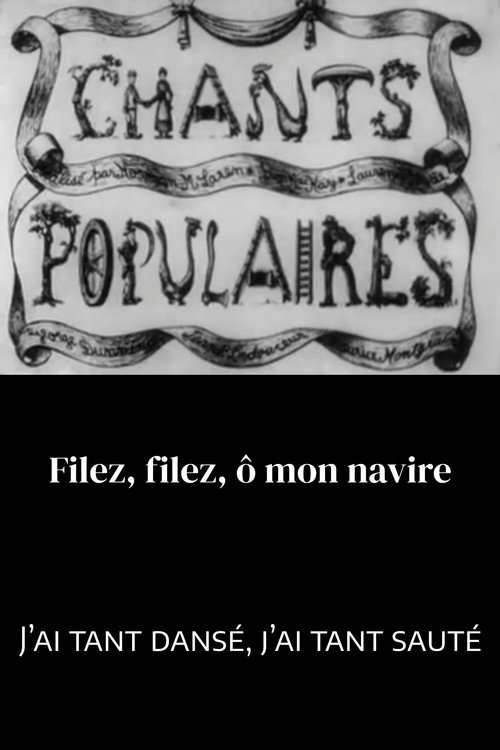
Chants populaires nº 4 1946
Jim Mackay's *Chants populaires nº 4* (1946) is a charming short animation that brings two traditional French folk songs to life with artistic flair.
Director: Jim Mackay
Frequently Asked Questions
What is Chants populaires nº 4 (1946) about?
*Chants populaires nº 4* interprets two classic French folk tunes through a mix of charcoal sketches and hand-drawn animation. The first song's lyrics about sailing are illustrated in stark, expressive strokes, while the second's lively dance theme comes to life in playful, rhythmic cartoons.
Who directed Chants populaires nº 4?
Chants populaires nº 4 was directed by Jim Mackay, an animator known for blending traditional techniques with innovative visual storytelling.
Who stars in Chants populaires nº 4?
Credited cast information for *Chants populaires nº 4* is not available.
Is Chants populaires nº 4 (1946) worth watching?
While it's a niche title, *Chants populaires nº 4* offers a fascinating glimpse into early animation techniques and folk-tune adaptation. Its six-minute runtime and artistic merit make it a curiosity for animation enthusiasts, though its obscurity may limit broader appeal.
How long is Chants populaires nº 4?
Chants populaires nº 4 has a runtime of 6 minutes.
About Chants populaires nº 4 (1946) — A Folk-Tune Animated Short That Marries Art and Music
Jim Mackay's *Chants populaires nº 4* (1946) is a charming short animation that brings two traditional French folk songs to life with artistic flair. The six-minute film blends charcoal sketches with hand-drawn cartoons on celluloid, channeling the spirit of Walt Disney's signature style while celebrating rustic musical heritage. "Filez, filez, ô mon navire" unfolds in bold, monochrome strokes, evoking the sea's restless motion, while "J'ai tant dansé, j'ai tant sauté" bursts into playful, animated movement—complete with dancing figures and spirited choreography. Mackay's experimental approach merges nostalgia with innovation, crafting a miniature cinematic gem that feels both timeless and refreshingly unique.
This obscure yet delightful animated short offers a snapshot of mid-century artistic experimentation, where music and visuals intertwine to capture the raw energy of folk traditions. The film's concise runtime and striking techniques make it a fascinating study for animation fans, though its obscurity ensures it remains a hidden treasure. Whether you're drawn to its historical techniques or simply curious about early experimental cartoons, *Chants populaires nº 4* delivers a brief but memorable escape into the past.