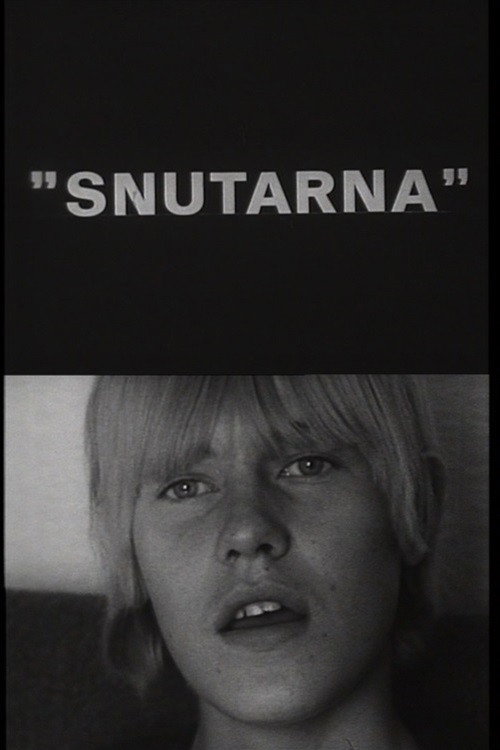
Snutarna 1966
Step back to a charged Stockholm evening in 1966 when director Jan Lindkvist captured raw, unfiltered conversations at a youth club.
Director: Jan Lindkvist
Cast
Frequently Asked Questions
What is Snutarna (1966) about?
This 1966 Swedish documentary captures a pivotal evening inside a Stockholm youth club where 13 teenagers share their experiences with police violence and debate the role of law enforcement in their lives. Director Jan Lindkvist turns the setting into a spontaneous forum for unfiltered youth perspectives.
Who directed Snutarna?
Snutarna was directed by Jan Lindkvist, a filmmaker known for his socially conscious and observational style in mid-century Swedish documentaries.
Who stars in Snutarna?
The film features Kenneth 'Kenta' Gustafsson and Gustav 'Stoffe' Svensson prominently, along with 11 other young participants whose candid testimonies drive the documentary's narrative.
Is Snutarna (1966) worth watching?
While it's a short documentary with no IMDb rating, Snutarna offers a rare, unvarnished snapshot of youth dissent in 1960s Sweden. Its historical and cultural value makes it compelling for fans of political cinema and Scandinavian documentaries.
How long is Snutarna?
Snutarna runs for 23 minutes.
About Snutarna (1966) — A raw 1960s Swedish youth documentary on police and power
Step back to a charged Stockholm evening in 1966 when director Jan Lindkvist captured raw, unfiltered conversations at a youth club. Thirteen teenagers open up about their encounters with police violence and share their pointed perspectives on authority, creating a short but electrifying documentary that pulses with the urgency of youth rebellion. Shot in a single hot summer night, the film strips away any veneer of objectivity, letting the voices of Kenneth 'Kenta' Gustafsson and Gustav 'Stoffe' Svensson stand at the forefront of a charged dialogue that still resonates decades later.
Snutarna (1966) isn't just a historical artifact; it's a time capsule of dissent that hums with authenticity and youthful defiance. Through Lindkvist's lens, the documentary transforms a simple youth-club gathering into a platform for candid testimony, where the camera doesn't just observe—it listens, amplifies, and challenges. The film's brevity belies its impact, offering a snapshot of societal friction that feels as immediate today as it did in the late 1960s, especially when revisited through the voices of those who lived it.
Perfect for fans of raw, socially charged cinema, Snutarna delivers a short but memorable experience that lingers long after the credits roll.