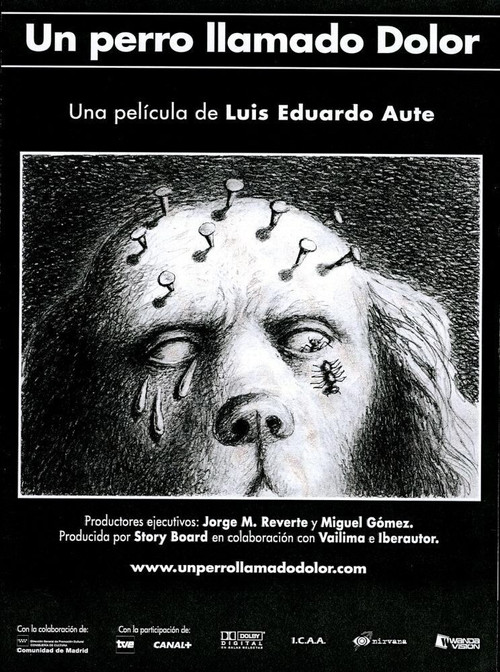
A Dog Named Pain 2001
Luis Eduardo Aute's experimental animated gem *A Dog Named Pain (2001)* weaves together over 4,000 of his own sketches and cutting-edge digital techniques to craft a mesmerizing visual symphony.
Director: Luis Eduardo Aute
Frequently Asked Questions
What is A Dog Named Pain (2001) about?
*A Dog Named Pain* unfolds as a series of seven black-and-white animated portraits, exploring the tangled relationships between avant-garde artists and their models. The film blends Luis Eduardo Aute's own drawings with digital animation, creating a deeply personal and visually striking narrative that examines creativity, inspiration, and human connection.
Who directed A Dog Named Pain?
The film was directed by Luis Eduardo Aute, a renowned Spanish singer-songwriter and visual artist known for his multidisciplinary approach to storytelling.
Who stars in A Dog Named Pain?
Cast details for *A Dog Named Pain (2001)* are not available, as the project focuses more on the collaborative process of artists and their models than traditional acting roles.
Is A Dog Named Pain (2001) worth watching?
*A Dog Named Pain* is a fascinating watch for fans of experimental animation and avant-garde cinema, offering a unique blend of technical skill and emotional resonance. While it may not appeal to mainstream audiences, its bold visual style and thematic depth make it a standout in the genre.
How long is A Dog Named Pain?
The runtime of *A Dog Named Pain (2001)* is 90 minutes.
About A Dog Named Pain (2001) — A Visual Masterpiece by Luis Eduardo Aute
Luis Eduardo Aute's experimental animated gem *A Dog Named Pain (2001)* weaves together over 4,000 of his own sketches and cutting-edge digital techniques to craft a mesmerizing visual symphony. This ambitious drama unfolds through seven striking black-and-white portraits, delving into the complex bonds between unconventional artists and their muses. Each frame feels like a living sketchbook, blending raw emotion with technical brilliance, immersing viewers in a world where creativity and vulnerability collide. The film's stark, monochromatic palette enhances its introspective tone, evoking a dreamlike atmosphere where every line tells a story.
At its core, *A Dog Named Pain (2001)* challenges conventional storytelling, inviting audiences to interpret the relationships on screen through a lens of artistic expression and personal struggle. Aute's vision transforms abstract sketches into fluid animation, creating a hauntingly poetic experience that lingers long after the credits roll. For fans of experimental cinema and animation enthusiasts, this film offers a rare blend of technical innovation and emotional depth, standing as a testament to the power of visual artistry.