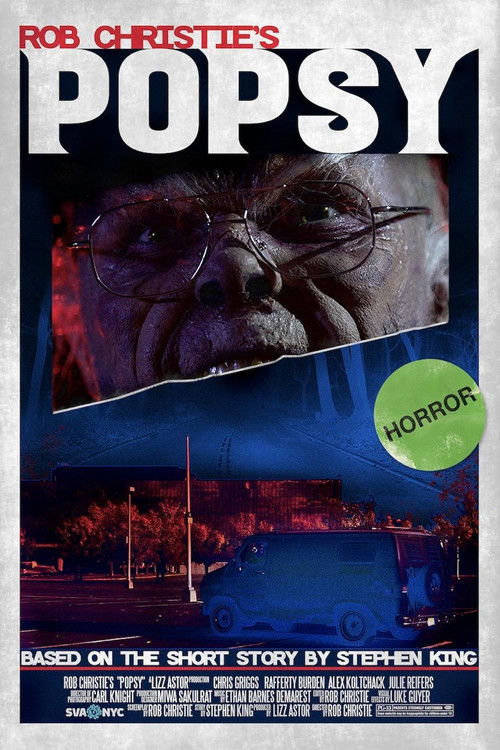
Popsy 2020
"Sometimes debt is better"
In *Popsy (2020)*, director Rob Christie crafts a tense 11-minute horror short steeped in moral dread and psychological unease. The story follows Briggs Sheridan, a desperate man entangled in the grim underbelly of human trafficking, lured by the promise of quick cash.
Director: Rob Christie
Cast
Frequently Asked Questions
What is Popsy (2020) about?
Popsy follows Briggs Sheridan, a man desperate for money who takes a job in human trafficking. When a child he abducts cries out for their guardian, Sheridan's plan unravels in terrifying fashion, revealing the horrifying consequences of his choices.
Who directed Popsy?
Rob Christie directed Popsy, bringing a sharp focus to its claustrophobic horror and moral tension.
Who stars in Popsy?
The cast includes Rafferty Burden, Rob Christie, Chris Griggs, Alex Koltchak, and Julie Reifers.
Is Popsy (2020) worth watching?
For horror fans seeking a compact, high-tension thriller, Popsy delivers a punchy 11-minute punch. While unrated, its tight storytelling and unsettling premise make it a memorable watch for those who enjoy psychological horror with a dose of grim realism.
How long is Popsy?
Popsy runs for 11 minutes.
🎥 Trailer
Popsy (2020): A Shocking 11-Minute Horror Short — Full Film Details
In *Popsy (2020)*, director Rob Christie crafts a tense 11-minute horror short steeped in moral dread and psychological unease. The story follows Briggs Sheridan, a desperate man entangled in the grim underbelly of human trafficking, lured by the promise of quick cash. His latest assignment—a seemingly routine abduction—shatters when the child escapes his grasp, screaming for a guardian named "Popsy." This chilling moment forces Sheridan to confront the terrifying consequences of his actions, delivering a grim reminder that some debts can never be repaid.
With its stark atmosphere and minimalist storytelling, *Popsy* explores themes of guilt, retribution, and the inescapable nature of violence. The film's compact runtime amplifies its intensity, leaving audiences questioning the true cost of compromise.