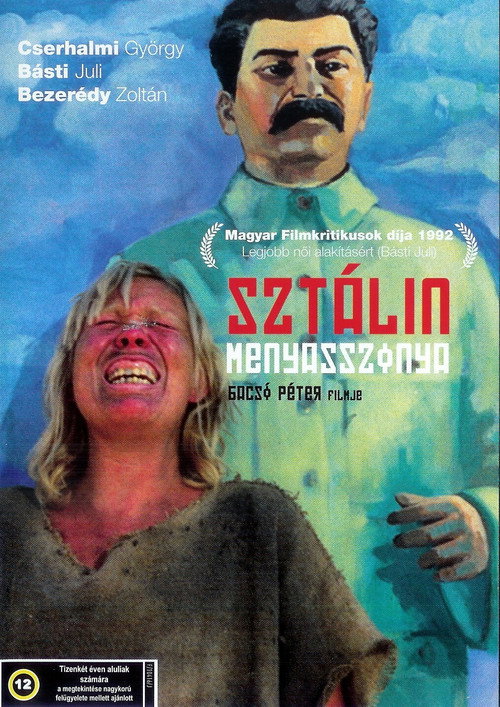
Stalin's Bride 1991
Directed by Péter Bacsó, Stalin's Bride (1991) is a poignant drama that takes viewers on a thought-provoking journey into the lives of Soviet villagers.
Director: Péter Bacsó
Cast






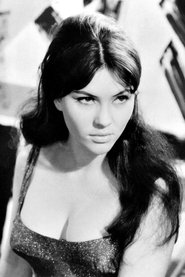
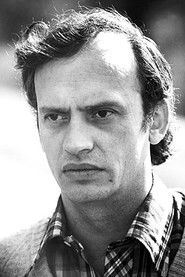
Frequently Asked Questions
What is Stalin's Bride (1991) about?
The film follows the lives of Soviet villagers as they grapple with the dehumanizing effects of totalitarianism, focusing on a young woman with physical and mental disabilities who finds solace in a massive portrait of Stalin.
Who directed Stalin's Bride?
Péter Bacsó brings his unique vision to the film, crafting a poignant drama that explores the human cost of ideological fervor.
Who stars in Stalin's Bride?
The film features standout performances from Juli Básti, György Cserhalmi, and Nina Petri, among others.
Is Stalin's Bride (1991) worth watching?
While its slow pace and somber tone may not appeal to all viewers, Stalin's Bride (1991) is a powerful drama that raises important questions about the human cost of ideological extremism.
How long is Stalin's Bride?
The film has a runtime of 89 minutes.
About Stalin's Bride (1991) — A poignant drama about the human cost of ideological fervor
Directed by Péter Bacsó, Stalin's Bride (1991) is a poignant drama that takes viewers on a thought-provoking journey into the lives of Soviet villagers. The film's narrative revolves around a young woman with physical and mental disabilities, who is brought to the village by a train. The villagers, initially reluctant to accept her, eventually form a bond with her, but not without facing the harsh realities of their society. As the story unfolds, the villagers' interactions with the young woman serve as a powerful commentary on the dehumanizing effects of totalitarian regimes. Befriended by few and tormented by many, she finds solace in a massive portrait of Stalin, a potent symbol of the oppressive forces that govern her life. Through its nuanced portrayal of a marginalized individual, Stalin's Bride (1991) invites viewers to reflect on the human cost of ideological fervor. The film's atmospheric setting, replete with dusty crossroads and a cracked mirror, adds to the overall sense of desolation and despair. As the villagers grapple with their own mortality and the meaning of their existence, the film poses profound questions about the nature of humanity and the impact of societal expectations on individual lives. With its thought-provoking themes and powerful performances, Stalin's Bride (1991) is a must-watch for fans of drama and social commentary.
In the world of Stalin's Bride (1991), the boundaries between human dignity and dehumanization are constantly blurred. The film's stark portrayal of a society in which the individual is subjugated to the collective raises important questions about the consequences of ideological extremism. As the villagers struggle to come to terms with their own vulnerabilities, the film serves as a poignant reminder of the importance of empathy and compassion in the face of adversity.
With its haunting atmosphere and powerful performances, Stalin's Bride (1991) is a film that lingers long after the credits roll. Its thought-provoking themes and nuanced portrayal of a marginalized individual make it a must-watch for fans of drama and social commentary.