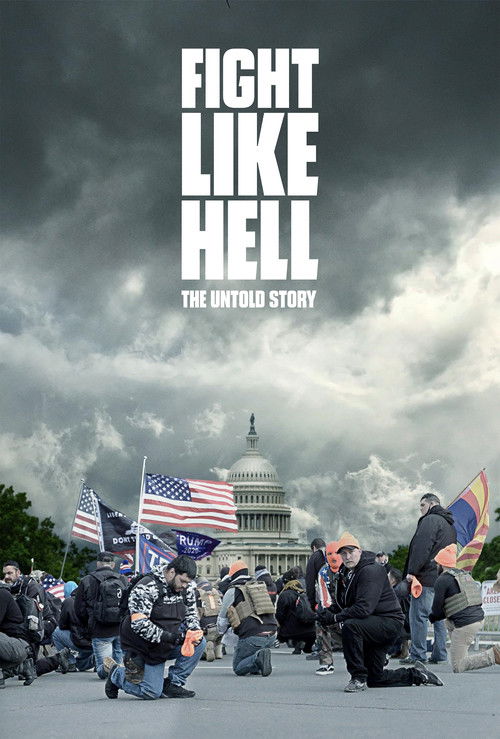
Fight Like Hell 2024
In the wake of January 6, *Fight Like Hell (2024)* pulls back the curtain on one of the most divisive days in modern American history.
Director: Jon Long
Cast

Donald Trump
Self (archive footage)

Roger Stone
Self (archive footage)

Steve Bannon
Self (archive footage)

Rudolph Giuliani
Self (archive footage)
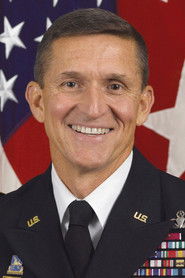
Michael Flynn
Self (archive footage)

Alex E. Jones
Self (archive footage)

Nick Fuentes
Self (archive footage)
Frequently Asked Questions
What is Fight Like Hell (2024) about?
*Fight Like Hell* examines the January 6 Capitol riot through a documentary lens, presenting events without narration to let the footage speak for itself. The film explores the pivotal day's aftermath and its implications for American democracy, urging viewers to reflect on their role in safeguarding it.
Who directed Fight Like Hell?
Jon Long helms *Fight Like Hell*, delivering a documentary that prioritizes raw footage and unfiltered perspectives over traditional narration.
Who stars in Fight Like Hell?
The documentary features high-profile figures like Donald Trump, Roger Stone, Steve Bannon, Rudolph Giuliani, Michael Flynn, and Alex E. Jones among its interviewees and subjects.
Is Fight Like Hell (2024) worth watching?
As a documentary tackling a defining moment in recent history, *Fight Like Hell* offers a compelling, unvarnished look at January 6. Its 95-minute runtime packs a punch, though viewers should come prepared for divisive themes and unsettling imagery.
How long is Fight Like Hell?
The documentary runs for 95 minutes.
About Fight Like Hell (2024) — A raw, unfiltered documentary on January 6 and the fight for democracy
In the wake of January 6, *Fight Like Hell (2024)* pulls back the curtain on one of the most divisive days in modern American history. Directed by Jon Long, this documentary strips away narration to present raw footage and unfiltered perspectives from the frontlines of that chaotic moment. Through the lens of democracy's fragility, the film invites viewers to confront uncomfortable truths about collective responsibility and the forces that shape our civic landscape.
Without commentary or bias, *Fight Like Hell* immerses audiences in the events leading up to and unfolding on January 6, blending archival material with intimate interviews. The documentary doesn't just document history—it challenges viewers to ask: What does it take to defend a system under siege, and who bears the weight of its survival?