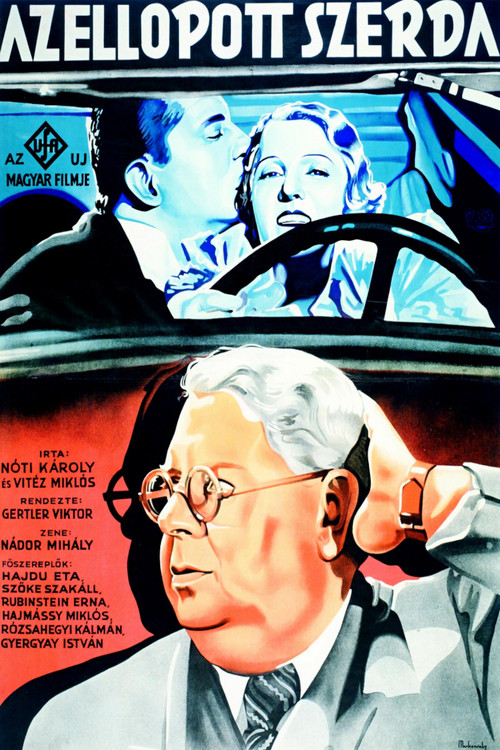
Az ellopott szerda 1933
Az ellopott szerda (1933) is a charming Hungarian romantic comedy that dives into the whimsy of early 1930s advertising culture and identity puzzles.
Director: Viktor Gertler
Cast

Frequently Asked Questions
What is Az ellopott szerda (1933) about?
Az ellopott szerda follows a Berlin soapmaker who searches for the mysterious woman in a photograph he wants to use in an ad campaign. With the help of a forgetful photojournalist and a private detective, the story unfolds as a playful chase through 1930s Berlin, filled with comedic twists and romantic surprises.
Who directed Az ellopott szerda?
Az ellopott szerda was directed by Viktor Gertler, a notable figure in Hungarian cinema known for blending humor with social commentary.
Who stars in Az ellopott szerda?
The film stars Kálmán Rózsahegyi, Eta Hajdú, Erna Rubinstein, Miklós Hajmássy, and S.Z. Sakall in key roles.
Is Az ellopott szerda (1933) worth watching?
Though it's a pre-war classic, Az ellopott szerda offers a delightful snapshot of 1930s humor and romance, making it a charming watch for fans of vintage comedies. Its lighthearted plot and nostalgic setting provide a refreshing escape into early cinema charm.
How long is Az ellopott szerda?
Runtime details are not listed.
About Az ellopott szerda (1933) — A 1930s Romantic Comedy of Mistaken Identities
Az ellopott szerda (1933) is a charming Hungarian romantic comedy that dives into the whimsy of early 1930s advertising culture and identity puzzles. Directed by Viktor Gertler, this lighthearted film follows Rohr, a Berlin soapmaker on the hunt for the perfect face to sell his latest product. His search leads him to a mysterious photograph discovered by photojournalist Schmidt—except neither knows who the woman in the picture truly is. As a private detective agency joins the chase, the charmingly forgetful Schmidt finds himself tangled in a delightful web of mistaken identities and serendipitous connections.
The movie sparkles with the playful energy of pre-war Europe, blending romance and comedy against a backdrop of glamorous advertising and photographic intrigue. Gertler's direction infuses the story with wit and warmth, while the ensemble cast—led by Kálmán Rózsahegyi and Eta Hajdú—brings the quirky characters to life with charm and humor. The film's themes of chance encounters and fleeting beauty resonate as much today as they did in 1933, offering a nostalgic yet timeless escape into the golden age of cinema.