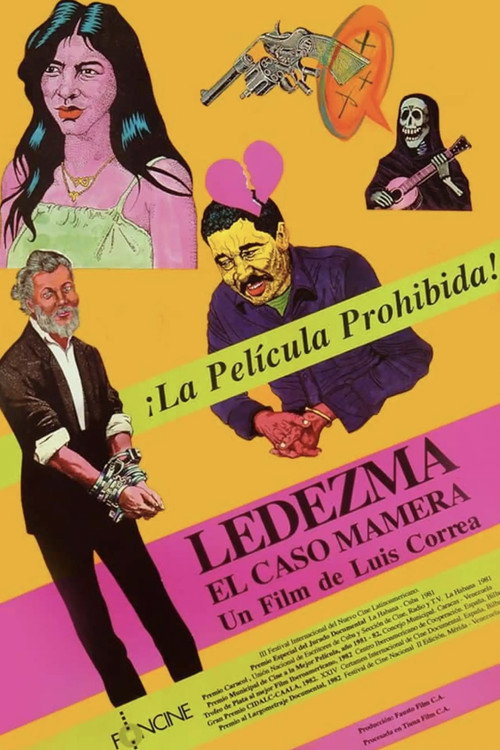
Ledezma, el caso mamera 1981
A gripping Venezuelan crime drama from 1981, *Ledezma, el caso mamera* plunges into the dark underbelly of police corruption and personal vendetta.
Director: Luis Correa
Frequently Asked Questions
What is *Ledezma, el caso mamera* (1981) about?
This Venezuelan crime drama explores the true story of Argenis Ledesma, a police officer imprisoned for killing three young men he accused of having affairs with his wife. The film examines the corruption, cover-ups, and personal tragedy that followed, blending real-life testimonies with a tense, dramatic retelling.
Who directed *Ledezma, el caso mamera*?
The film was directed by Luis Correa, a filmmaker known for his raw and socially conscious storytelling in Venezuelan cinema.
Who stars in *Ledezma, el caso mamera*?
The cast primarily features real-life figures involved in the case, with Argenis Ledesma himself providing key testimony alongside law enforcement and legal personnel close to the events.
Is *Ledezma, el caso mamera* (1981) worth watching?
While not widely celebrated internationally, the film offers a fascinating glimpse into Venezuela's 1980s social and legal landscape. Its documentary-style approach and unsettling themes make it a compelling watch for fans of true-crime dramas and political cinema.
How long is *Ledezma, el caso mamera*?
The film has a runtime of 95 minutes.
About Ledezma, el caso mamera (1981) — Inside Venezuela's most infamous police brutality case
A gripping Venezuelan crime drama from 1981, *Ledezma, el caso mamera* plunges into the dark underbelly of police corruption and personal vendetta. Directed by Luis Correa, the film reconstructs the real-life story of Argenis Ledesma, a Metropolitan Police officer jailed for the murders of three young men accused of having intimate relationships with his wife. Through testimonies from Ledesma himself and key figures entwined in the scandal, the movie exposes the raw brutality of a system where law enforcement becomes the judge, jury, and executioner. The atmosphere is thick with tension, blending a documentary-like authenticity with the emotional weight of a family torn apart by suspicion and violence.
The narrative doesn't just retell a crime—it dissects the corruption that silenced the truth. When a documentary crew attempts to uncover the facts, their work is censored, and its director is imprisoned, leaving the public to grapple with a story that feels both personal and politically charged. The film's themes resonate with betrayal, justice, and the blurred lines between public duty and private rage, all wrapped in the gritty realism of 1980s Venezuela.