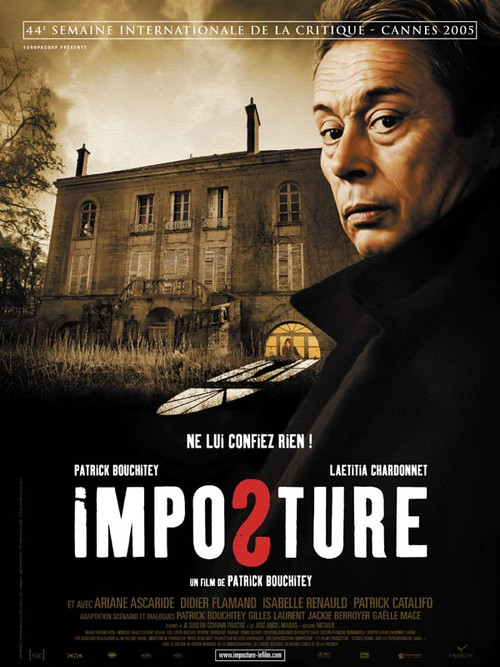
Imposture 2005
In *Imposture (2005)*, a respected literary professor, crippled by creative exhaustion, spirals into a morally treacherous act when he kidnaps a gifted student to claim her groundbreaking essay as his own.
Director: Patrick Bouchitey
Cast






Frequently Asked Questions
What is *Imposture* (2005) about?
The film follows a struggling literary professor who kidnaps one of his students after reading her brilliant essay, which eerily mirrors his own past work. Desperate to reclaim his fading relevance, he crosses ethical lines, leading to a cat-and-mouse game of guilt and manipulation.
Who directed *Imposture*?
Patrick Bouchitey directed *Imposture*, bringing a keen eye for psychological tension and moral ambiguity to the screen.
Who stars in *Imposture*?
The film features Patrick Bouchitey in the lead role, supported by Laetitia Chardonnet, Isabelle Renauld, Patrick Catalifo, and Ariane Ascaride.
Is *Imposture* (2005) worth watching?
While *Imposture* isn't widely rated on IMDb, its gripping psychological drama and strong performances make it a compelling watch for fans of character-driven thrillers. The film's themes of artistic desperation and moral decay add depth to its tense narrative.
How long is *Imposture*?
*Imposture* has a runtime of 101 minutes.
About Imposture (2005) — A Psychological Thriller About Art and Moral Ruin
In *Imposture (2005)*, a respected literary professor, crippled by creative exhaustion, spirals into a morally treacherous act when he kidnaps a gifted student to claim her groundbreaking essay as his own. Directed by Patrick Bouchitey, the film weaves a tense psychological drama that questions the boundaries of art, identity, and exploitation. With an atmosphere of quiet desperation and moral ambiguity, it explores how ambition can corrupt the pursuit of greatness.
The story unfolds with a slow-burn intensity, anchored by Bouchitey's sharp direction and a stellar cast, including Laetitia Chardonnet and Isabelle Renauld. As the professor's once-stable world unravels, the film delves into themes of deception, power, and the cost of artistic theft. It's a gripping character study that lingers long after the credits roll.