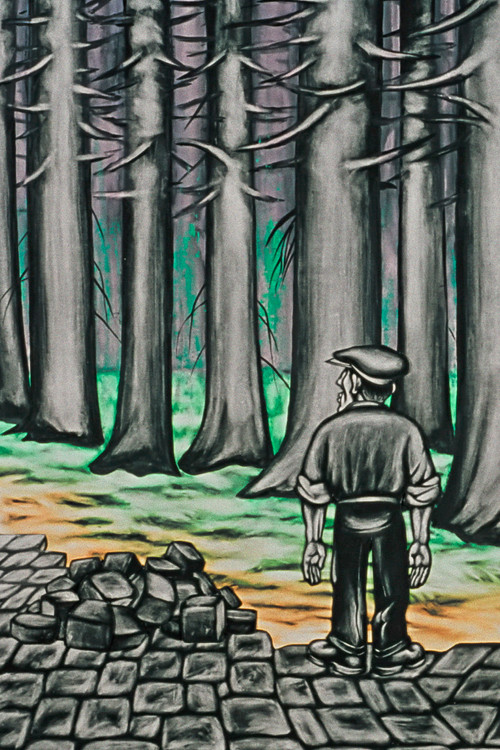
Bricking Up the World 1972
Bricking Up the World (1972) is a hauntingly minimalist animated short that explores humanity's relentless march toward progress at any cost.
Director: Zdzisław Kudła
Frequently Asked Questions
What is Bricking Up the World (1972) about?
This 1972 animated short follows a paver laying cobblestones across the earth, only to witness entire forests being cleared in his path. Faced with the final tree, he pauses, experiences a moment of clarity, and decides to retreat instead of continuing.
Who directed Bricking Up the World?
Bricking Up the World was directed by Zdzisław Kudła, a filmmaker known for his experimental and socially conscious work in animation.
Who stars in Bricking Up the World?
Cast details for Bricking Up the World (1972) are not publicly listed.
Is Bricking Up the World (1972) worth watching?
As a brief but powerful animated allegory, Bricking Up the World (1972) offers more than its runtime suggests. Its themes of environmental impact and moral awakening resonate strongly, making it a compelling watch for fans of short films and thought-provoking cinema.
How long is Bricking Up the World?
Bricking Up the World (1972) has a runtime of 7 minutes.
About Bricking Up the World (1972) — A Short Animation on Progress and Retreat
Bricking Up the World (1972) is a hauntingly minimalist animated short that explores humanity's relentless march toward progress at any cost. Directed by Zdzisław Kudła, this seven-minute film unfolds as a lone paver lays down endless cobblestones, each step a silent testament to industrialization's march. As the pavement spreads relentlessly toward a dense forest, the trees begin to fall—one by one—until only a single standing giant remains. In a moment of quiet revelation, the paver hesitates, turns, and walks away, leaving behind a stark landscape of choice and consequence.
With its stark visuals and deliberate pacing, Bricking Up the World (1972) becomes a metaphor for environmental destruction and existential reckoning. Kudła's direction transforms a simple construction scene into a poignant allegory about boundaries, regret, and the power of reversal. The 1972 animation may be brief, but its message lingers long after the last frame—an urgent call to reconsider how far is too far in our relentless pursuit of development.