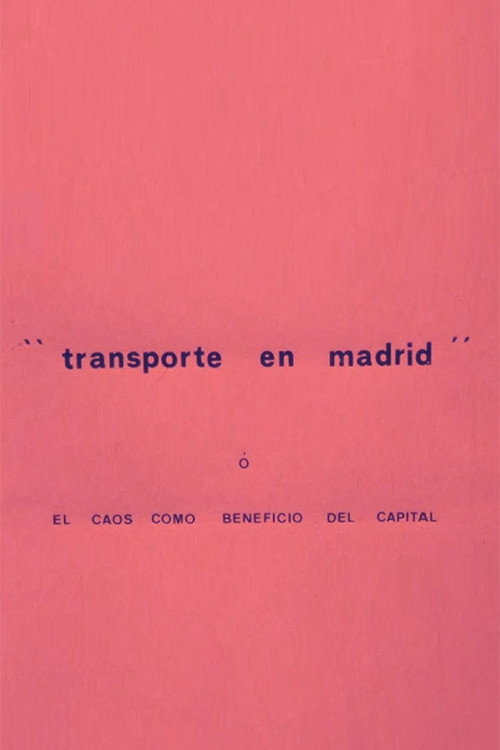
Transporte en Madrid o El caos como beneficio del capital 1977
Dive into the sharp, politically charged world of *Transporte en Madrid o El caos como beneficio del capital (1977)*, a compelling documentary by Colectivo de Cine Polans that dissects the fractured transport system of 1970s Madrid.
Director: Colectivo de Cine Polans
Frequently Asked Questions
What is *Transporte en Madrid o El caos como beneficio del capital* (1977) about?
This documentary scrutinizes the public transport chaos in Madrid during the 1970s, exposing how it reflected—and perpetuated—the inequalities of a capitalist urban model. It's less about buses and trains and more about the people left behind by a system designed for profit over accessibility.
Who directed *Transporte en Madrid o El caos como beneficio del capital*?
Director information is not available.
Who stars in *Transporte en Madrid o El caos como beneficio del capital*?
Cast details for this 1977 documentary are not listed.
Is *Transporte en Madrid o El caos como beneficio del capital* (1977) worth watching?
As a raw, politically charged short film, it offers a fascinating snapshot of 1970s Spain's urban struggles. While its unrated status on IMDb means it's not widely known, its themes of inequality and infrastructure remain strikingly relevant—making it compelling for students of political cinema or urban history.
How long is *Transporte en Madrid o El caos como beneficio del capital*?
The film runs for 22 minutes.
About Transporte en Madrid o El caos como beneficio del capital (1977) — A 1970s Documentary on Urban Inequality
Dive into the sharp, politically charged world of *Transporte en Madrid o El caos como beneficio del capital (1977)*, a compelling documentary by Colectivo de Cine Polans that dissects the fractured transport system of 1970s Madrid. More than just a critique of urban mobility, this short film uncovers the hidden costs of a capitalist urban model, exposing how infrastructure serves the powerful while marginalizing the public. Through a lens of socioeconomic urgency, it challenges viewers to question the very foundations of city planning and the systems that shape our daily lives.
At just 22 minutes, the film blends gritty realism with ideological fervor, painting a vivid picture of a city in transition. By focusing on the chaos of Madrid's transport networks, it frames mobility not as a convenience but as a battleground for class and power. Ideal for fans of political cinema and urban studies, *Transporte en Madrid* remains a bold artifact of its time—one that resonates with modern debates about public transit, inequality, and the price of progress.