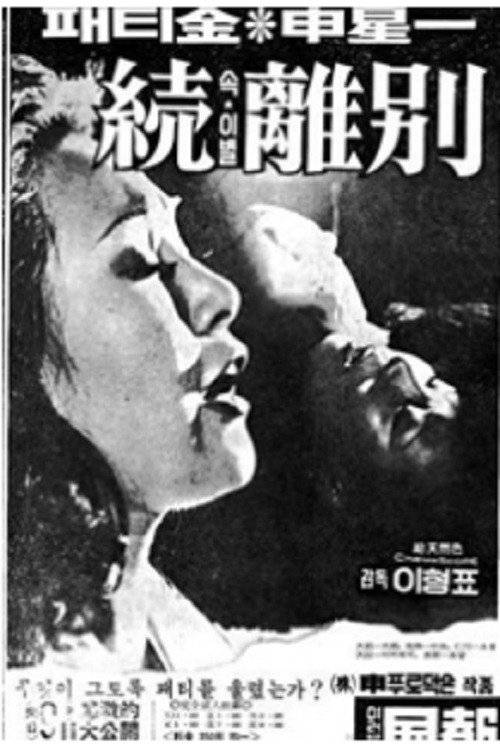
Farewell 2 1974
Director Lee Hyeong-pyo's *Farewell 2 (1974)* is a poignant Korean drama blending romance and music, set against the bittersweet backdrop of Seoul's changing times.
Director: Lee Hyeong-pyo
Cast


Frequently Asked Questions
What is Farewell 2 (1974) about?
*Farewell 2* follows two women whose lives are shaped by love, separation, and the quiet ache of goodbye. Their stories unfold through vivid musical sequences and understated performances, painting a portrait of resilience and the memories that refuse to let go.
Who directed Farewell 2?
Director information is not available.
Who stars in Farewell 2?
The film features powerhouse performances from Patti Kim, Choe Jeong-a, Shin Seong-il, Kim Ok-jin, and Kim Kyung-soo.
Is Farewell 2 (1974) worth watching?
While not widely rated, *Farewell 2* stands out for its emotional authenticity and musical depth. Fans of classic Korean dramas will appreciate its restrained style and the chemistry between its leads.
How long is Farewell 2?
The film runs for 80 minutes.
About Farewell 2 (1974) — A Haunting Korean Drama of Love and Loss
Director Lee Hyeong-pyo's *Farewell 2 (1974)* is a poignant Korean drama blending romance and music, set against the bittersweet backdrop of Seoul's changing times. The 80-minute film follows the emotional journey of two women—played by Patti Kim and Choe Jeong-a—whose lives intertwine as they navigate love, loss, and the lingering echoes of farewell. With Shin Seong-il and Kim Ok-jin rounding out the core cast, the movie unfolds like a haunting melody, where every note and glance carries the weight of unresolved goodbyes. The restrained yet deeply expressive performances mirror the film's themes of transience, memory, and the fragile connections that linger long after parting.
Stripped of overt melodrama, *Farewell 2* relies on subtle storytelling to convey its emotional depth, making it a standout in 1970s Korean cinema. The minimalist runtime belies its powerful impact, leaving viewers with a lingering sense of nostalgia that refuses to fade.