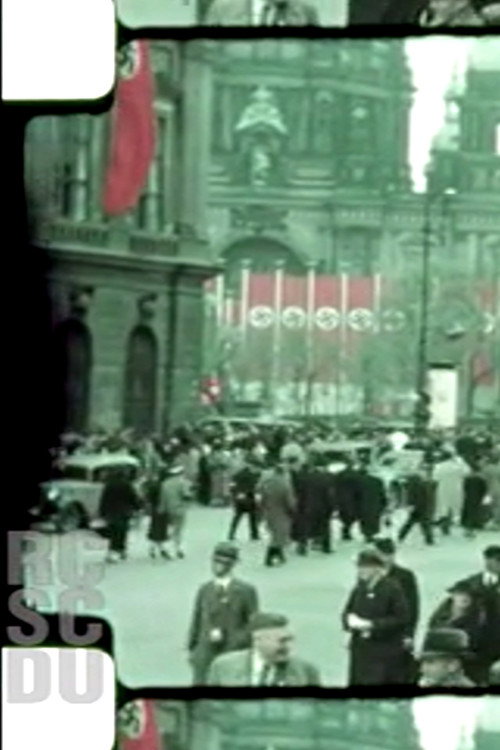
Berlin May Day 1936
Step back into 1936 with *Berlin May Day*, a striking short documentary that captures the charged atmosphere of Nazi-era Germany. Directed by Horace M.
Director: Horace M. Weir
Frequently Asked Questions
What is Berlin May Day (1936) about?
This short documentary from 1936 documents the May Day parade in Berlin during the Nazi era, showcasing massive crowds, swastika-adorned buildings, and the orchestrated display of political power on city streets. It serves as a visual record of mass spectacle under authoritarian rule.
Who directed Berlin May Day?
Director information is not available.
Who stars in Berlin May Day?
Cast details are not listed.
Is Berlin May Day (1936) worth watching?
As a historical documentary under 10 minutes, *Berlin May Day* offers unique insight into Nazi propaganda and public spectacle. While it lacks narrative depth, its stark visuals and historical significance make it a valuable watch for students of mid-20th-century history and film.
How long is Berlin May Day?
The film runs for approximately 5 minutes.
Berlin May Day (1936): Inside the Nazi-Era Parade Through the Lens of Documentary Film
Step back into 1936 with *Berlin May Day*, a striking short documentary that captures the charged atmosphere of Nazi-era Germany. Directed by Horace M. Weir, this five-minute film offers a rare glimpse into a May Day parade blanketing Berlin's streets, where flags fluttering from every building and massive crowds converging beneath them paint a vivid portrait of political pageantry. Shot in vibrant 16mm color, the footage immerses viewers in a moment frozen between pageantry and propaganda, where public celebration masks deeper ideological currents. The film's visual urgency—dense with swastikas and synchronized movements—serves as both historical record and unsettling artifact of its time.
Berlin May Day transports audiences to a pivotal chapter in European history, where communal spectacle and state control intertwine. Though stripped of dialogue, the film's power lies in its unflinching documentation of scale and symbolism, revealing how mass events became instruments of influence. Its brevity only amplifies its impact, leaving a haunting impression of unity engineered on a grand stage. For historians, film scholars, and curious viewers alike, this short documentary remains a compelling window into an era where every flag and face carried weight.