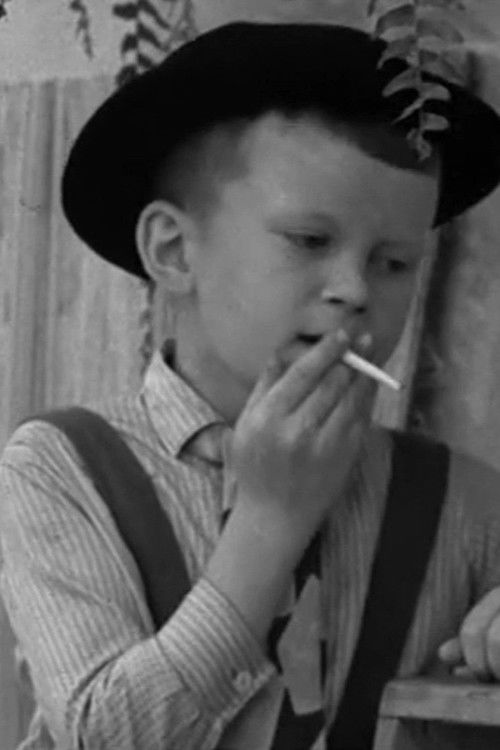
Playing Adults 1966
In Jadwiga Żukowska's 1966 short documentary *Playing Adults*, the camera quietly observes a group of kindergarten children as they mimic the world around them with astonishing precision.
Director: Jadwiga Żukowska
Frequently Asked Questions
What is Playing Adults (1966) about?
*Playing Adults* captures kindergarten children playfully imitating adults, from their speech to their mannerisms, offering a charming yet insightful look at how young minds absorb the world around them.
Who directed Playing Adults?
Playing Adults was directed by Jadwiga Żukowska, a filmmaker known for her observational documentaries exploring human behavior through a lens of curiosity and simplicity.
Who stars in Playing Adults?
The main stars of *Playing Adults* are the kindergarten children whose natural performances bring the film to life.
Is Playing Adults (1966) worth watching?
While *Playing Adults* is a short documentary with no IMDb rating, its charm lies in its authentic portrayal of childhood role-playing. Fans of observational cinema and nostalgic storytelling may find it delightful, though it's best viewed as a brief cinematic curiosity rather than a must-see classic.
How long is Playing Adults?
Playing Adults has a runtime of 13 minutes.
About Playing Adults (1966) — A Short Documentary on Childhood Mimicry and Playful Realism
In Jadwiga Żukowska's 1966 short documentary *Playing Adults*, the camera quietly observes a group of kindergarten children as they mimic the world around them with astonishing precision. Through the lens of imaginative play, the film transforms adult behaviors, mannerisms, and flaws into a playful yet revealing distortion. Shot in just 13 minutes, the documentary captures the raw honesty of childhood imitation, where little ones adopt the gestures, speech, and even the quirks of the grown-ups in their lives—turning reality into a mirror of innocence and humor.
The atmosphere of *Playing Adults* is both lighthearted and thought-provoking, blending documentary realism with the whimsy of youthful role-play. Żukowska's direction emphasizes authenticity, allowing the children's performances to unfold naturally, revealing societal patterns through the lens of youthful mimicry. It's a fleeting but memorable snapshot of how early experiences shape perception, framed in a way that feels both timeless and deeply relatable.