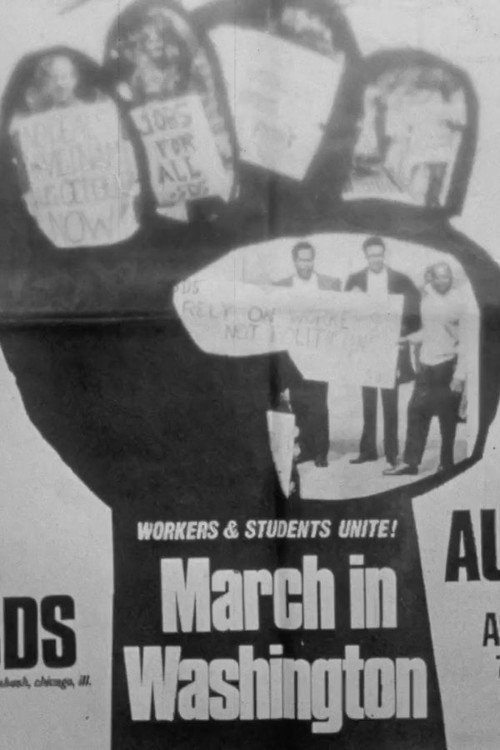
We Demand Jobs 1971
We Demand Jobs (1971) is a groundbreaking 4-minute documentary by director Marjorie Keller that captures a pivotal moment in Canada's queer activism history.
Director: Marjorie Keller
Frequently Asked Questions
What is We Demand Jobs (1971) about?
This short documentary captures the We Demand march of August 28, 1971, the first organized protest by queer activists in Canada. It marks a key moment in the fight for LGBTQ+ rights, coinciding with the second anniversary of decriminalization laws that ultimately failed to protect the community from ongoing policing and surveillance.
Who directed We Demand Jobs?
The film was directed by Marjorie Keller, a filmmaker whose work often explored social and political themes.
Who stars in We Demand Jobs?
Cast details for We Demand Jobs (1971) are not publicly listed.
Is We Demand Jobs (1971) worth watching?
While unrated on IMDb and very short in runtime, We Demand Jobs (1971) holds immense historical value as a record of early queer activism. Documentary lovers and students of social movements will appreciate its concise yet powerful portrayal of a pivotal protest in Canada's LGBTQ+ history.
How long is We Demand Jobs?
We Demand Jobs (1971) has a runtime of 4 minutes.
About We Demand Jobs (1971) — The 4-Minute Film That Sparked Canada's Queer Activism
We Demand Jobs (1971) is a groundbreaking 4-minute documentary by director Marjorie Keller that captures a pivotal moment in Canada's queer activism history. The film documents the We Demand march of August 28, 1971, the first public political demonstration by LGBTQ+ activists in the country.
Held on the second anniversary of Bill C-150, which decriminalized certain homosexual acts in 1969, the march highlighted how decriminalization failed to end police surveillance and harassment of queer communities. Keller's short documentary preserves this historic protest, offering a raw glimpse into the early fight for LGBTQ+ rights in Canada. Its themes of resistance, visibility, and the gap between legal reform and lived experience remain urgently relevant today.