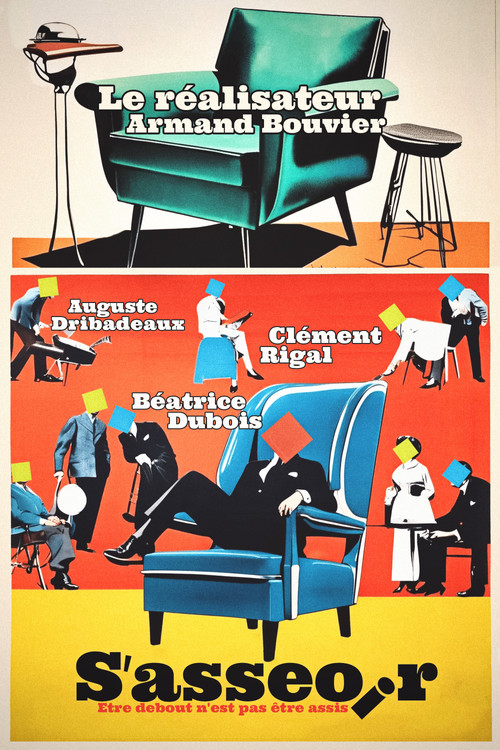
Sitting 1965
"Catching - not pitching"
Sitting (1965) is a four-hour French cinematic experiment crafted by director Armand Bouvier, weaving together slapstick absurdity with the philosophical weight of Albert Camus's existential musings.
Director: Armand Bouvier
Cast
Frequently Asked Questions
What is Sitting (1965) about?
Sitting (1965) follows a series of eccentric characters trapped in a world where logic takes a backseat to absurdity. The film uses humor and philosophical undertones to explore themes of existence, futility, and the human condition, all wrapped in a deliberately paced narrative.
Who directed Sitting?
Sitting was directed by Armand Bouvier, a filmmaker known for pushing boundaries between comedy and existential thought.
Who stars in Sitting?
The film features a standout cast including Béatrice Dubois, Clément Rigal, Auguste Dribadeaux, Wate Close, and Vito Jr. Spatafore.
Is Sitting (1965) worth watching?
If you enjoy slow-burn comedies with philosophical depth, Sitting (1965) is a fascinating oddity worth your time. Its unique blend of humor and existential musings makes it a cult favorite, though its four-hour runtime demands patience.
How long is Sitting?
Sitting (1965) has a runtime of 243 minutes, or just over four hours.
About Sitting (1965) — A French Comedy-Drama That Blends Absurdity with Existential Thought
Sitting (1965) is a four-hour French cinematic experiment crafted by director Armand Bouvier, weaving together slapstick absurdity with the philosophical weight of Albert Camus's existential musings. This rare blend of comedy and drama unfolds in a series of vignettes that challenge expectations, inviting viewers to laugh while pondering life's deeper absurdities. The film's eccentric characters, played by a talented ensemble cast, navigate a world where logic is optional and humor is a survival tactic. Shot through with dry wit and deliberate pacing, Sitting (1965) stands apart as a cult gem for audiences who crave something beyond the ordinary.
The atmosphere is one of controlled chaos, where every scene feels like a carefully choreographed farce laced with existential dread. Bouvier's direction balances lighthearted absurdity with moments of quiet introspection, creating a tone that's both playful and thought-provoking. Fans of avant-garde cinema will appreciate its boldness, while general audiences might find it a slow-burn but rewarding experience. Sitting (1965) isn't just a movie—it's an invitation to sit with the uncomfortable, to laugh at the meaningless, and to wonder what it all means.