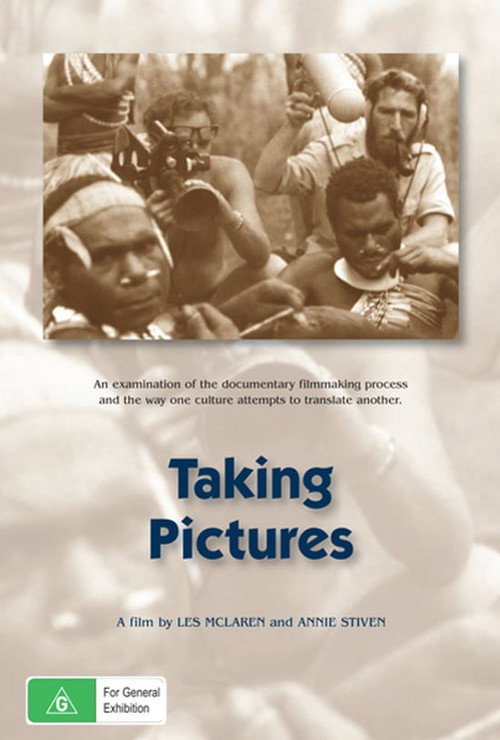
Taking Pictures 1996
"TAKING PICTURES is a thoughtful look at the way Western cameras have represented the lives of Papua New Guineans."
Taking Pictures (1996) dives into the evolving relationship between Western filmmakers and Papua New Guinea's rich cultural tapestry.
Director: Les McLaren
Cast
Frequently Asked Questions
What is Taking Pictures (1996) about?
Taking Pictures examines how Western filmmakers historically misrepresented Papua New Guineans as exotic curiosities, using biased narration to shape perceptions. The documentary contrasts this outdated approach with modern efforts to portray the country's rich cultural complexity through collaborative filmmaking.
Who directed Taking Pictures?
Taking Pictures was directed by Les McLaren, a filmmaker known for his long-standing work in Papua New Guinea and his commitment to authentic storytelling.
Who stars in Taking Pictures?
The documentary features contributions from filmmakers Bob Connolly, Robin Anderson, Chris Owen, Dennis O'Rourke, and Gary Kildea, whose collective work has reshaped narratives about PNG.
Is Taking Pictures (1996) worth watching?
As a documentary that challenges colonial-era biases, Taking Pictures (1996) offers a concise yet impactful perspective on cultural representation. Its 56-minute runtime makes it accessible, and its themes resonate with anyone interested in media ethics or Papua New Guinea's history.
How long is Taking Pictures?
Taking Pictures has a runtime of 56 minutes.
About Taking Pictures (1996) — How Cinema Evolved in Papua New Guinea
Taking Pictures (1996) dives into the evolving relationship between Western filmmakers and Papua New Guinea's rich cultural tapestry. Directed by Les McLaren, this documentary critiques the Commonwealth Film Unit's outdated portrayals of Papua New Guineans as mere curiosities, dictated by condescending narration. Through the lens of filmmakers like McLaren and Annie Stiven, who have spent decades living and working in PNG, the film champions a shift toward authentic representation. It celebrates the nuanced lives, languages, and perspectives of Papua New Guineans, contrasting colonial-era biases with a more respectful, collaborative approach to storytelling. The atmosphere is both reflective and empowering, inviting viewers to reconsider how indigenous stories are told on screen.
Focusing on the voices of those often overlooked, Taking Pictures (1996) highlights the power of cinema to bridge cultural divides. With a runtime of just 56 minutes, the documentary packs a thoughtful punch, challenging audiences to question who controls the narratives about marginalized communities. Whether you're a documentary enthusiast or a cultural studies aficionado, this film offers a concise yet profound exploration of representation and identity.