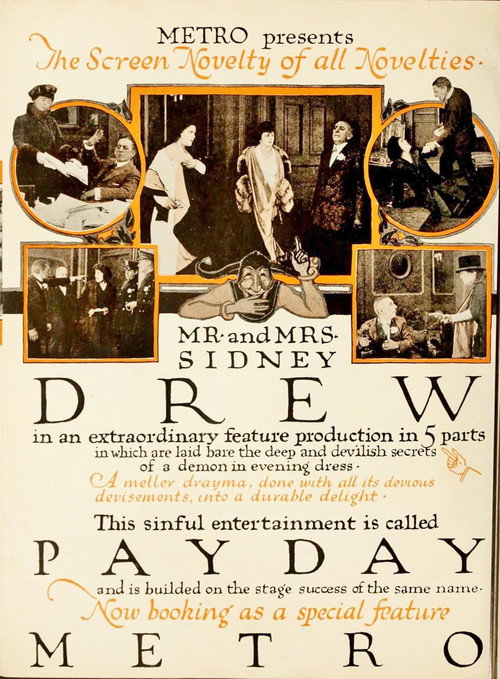
Pay Day 1918
"The screen novelty of all novelties"
Packed with razor-sharp wit and heartfelt drama, *Pay Day* (1918) is a silent-era gem from the prolific Sidney Drew, blending comedy and melodrama into a single feature.
Director: Sidney Drew
Cast


Frequently Asked Questions
What is Pay Day (1918) about?
*Pay Day* follows the tumultuous marriage between a wealthy, morally ambiguous industrialist and his working-class wife, exploring themes of class, loyalty, and redemption against the backdrop of early 20th-century society. The film contrasts sharp humor with dramatic tension, all wrapped in the visual storytelling of silent cinema.
Who directed Pay Day?
Sidney Drew, a pioneering director and actor of the silent era, helmed *Pay Day*. Known for his blend of comedy and drama, Drew crafted films that were as thought-provoking as they were entertaining.
Who stars in Pay Day?
The film features Sidney Drew and his real-life wife, Mrs. Sidney Drew, alongside Florence Short, Emily Lorraine, and Charles Riegel, delivering performances that anchor the film's emotional and comedic depth.
Is Pay Day (1918) worth watching?
Though unrated on IMDb, *Pay Day* stands out as a fascinating example of early silent-era storytelling, where comedy and drama intertwine seamlessly. Fans of vintage cinema or those intrigued by the social dynamics of the 1910s will likely find it a rewarding watch.
How long is Pay Day?
The runtime for *Pay Day* is 75 minutes, offering a concise yet rich cinematic experience perfect for a single sitting.
About Pay Day (1918) — A Silent Classic That Balances Comedy and Social Drama
Packed with razor-sharp wit and heartfelt drama, *Pay Day* (1918) is a silent-era gem from the prolific Sidney Drew, blending comedy and melodrama into a single feature. Tucked inside its 75-minute runtime is a story that dives deep into class divide: wealthy, morally gray industrialist Kirke Brentwood marries Doris Fenton, a woman from a much humbler background, setting the stage for tension, betrayal, and a reckoning that feels both timely and timeless. Drew's direction keeps the mood playful yet pointed, balancing slapstick flourishes with poignant moments that linger long after the final title card fades. The ensemble—led by Drew himself—delivers performances that are as charming as they are cutting, making *Pay Day* a fascinating snapshot of early cinema's ability to straddle laughter and tears.
This isn't just a relic from the silent film era; it's a sharp, self-aware reflection on ambition, love, and the price of progress. With its tagline promising "the screen novelty of all novelties," *Pay Day* delivers on that bold claim, offering a rare mix of entertainment and social commentary that still resonates over a century later. Whether you're a fan of silent cinema or simply love stories that pack emotional and comedic punches, this Drew classic deserves a spot on your watchlist.