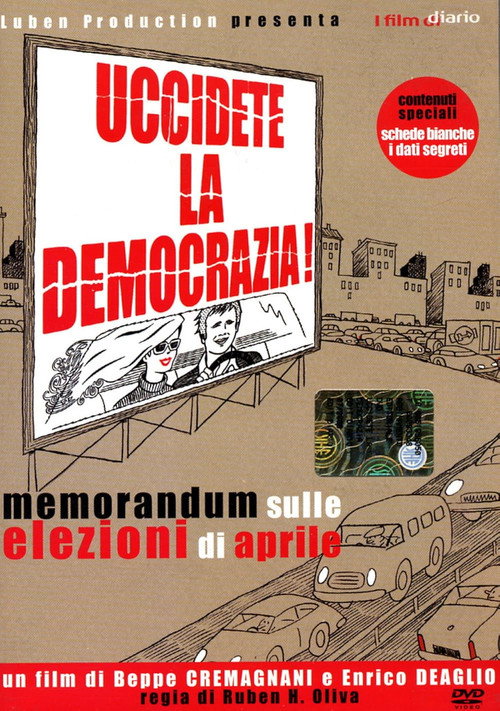
Uccidete la democrazia 2006
Dive into the charged world of Italian politics with *Uccidete la democrazia (2006)*, a probing documentary directed by Ruben H. Oliva that dissects the turbulent relationship between democracy and power.
Director: Ruben H. Oliva
Cast
Frequently Asked Questions
What is Uccidete la democrazia (2006) about?
This political documentary investigates the strains on democratic systems, using Italy's own struggles as a backdrop. It questions how power, media, and public trust intersect, often with unsettling clarity.
Who directed Uccidete la democrazia?
Director Ruben H. Oliva crafts a raw and revealing portrait of democracy's vulnerabilities through this film.
Who stars in Uccidete la democrazia?
The documentary features Elena Russo Arman and Alessandro Genovesi in key interviews, alongside voices shaping Italy's political dialogue.
Is Uccidete la democrazia (2006) worth watching?
As a political documentary, it delivers sharp insights and a timely perspective, ideal for viewers passionate about civic engagement or historical analysis. Its relevance and directorial vision make it a compelling watch.
How long is Uccidete la democrazia?
Runtime details are not listed.
About Uccidete la democrazia (2006) — A Political Documentary That Challenges What You Think You Know
Dive into the charged world of Italian politics with *Uccidete la democrazia (2006)*, a probing documentary directed by Ruben H. Oliva that dissects the turbulent relationship between democracy and power. Through a lens that balances urgency and reflection, the film examines the pressures facing democratic institutions in the early 21st century, framed within Italy's own socio-political landscape. With sharp focus and compelling interviews, Oliva guides viewers through the tensions that challenge the very foundations of participatory governance, creating an atmosphere that is both tense and thought-provoking.
Starring Elena Russo Arman and Alessandro Genovesi, *Uccidete la democrazia* brings together voices that cut to the heart of political disillusionment, media influence, and civic responsibility. As the documentary unfolds, it doesn't shy away from uncomfortable truths, weaving a narrative that feels as relevant today as it must have in 2006. Whether you're drawn by the pull of political cinema or the enduring question of what it means to 'kill democracy' in the name of preservation—or control—this film offers a gripping experience that lingers long after the credits roll.